
What follows is not only the list. Every spot below tells you where to stand, which hour of the day the light works, which season it belongs to, what it costs to get in, and whether there is a rule you need to know before you raise a camera. Two of these places restrict photography and one of them fines you for it.
Plan Japan in Stippl
Day-by-day planning, stays and budget in one app, with every place from this guide already on the map.
Download the appThe 20 best photo spots in Japan at a glance
Before the detail, the whole answer in one table. Prices are per adult, converted at about ¥160 to the euro.
| # | Spot | Where | Best light | Best season | Cost and the catch |
|---|---|---|---|---|---|
| 1 | Fushimi Inari Shrine | Kyoto | Before 7am, or after 8 pm under the lanterns | Any, avoid July and August heat | Free, no gate, open 24 hours |
| 2 | Shibuya Crossing | Tokyo | After dark, and again by day | Any | Free at street level; a rooftop drink from €3 (¥500) buys the view from above |
| 3 | Arashiyama Bamboo Grove | Kyoto | Before sunrise, genuinely | Any | Free and open 24 hours, and packed from mid morning |
| 4 | Mount Fuji from Lake Kawaguchi | Yamanashi | Before 10am | November to February for the clearest air | Free to look at, and visible on a minority of days |
| 5 | Itsukushima Shrine | Miyajima | Dawn, before the first ferry from Hiroshima | November for maple colour | Shrine €2 (¥300), ferry €1.25 (¥200), tide table decides the shot |
| 6 | Gion | Kyoto | Early evening as the lanterns come on | Any | Free, and photography is banned on the private alleys |
| 7 | Great Buddha of Kamakura | Kanagawa | Late afternoon | Any | An hour from Tokyo on the JR Yokosuka line |
| 8 | Tokyo Tower | Tokyo | After dark | Winter, when Fuji shows behind it | Observation decks in Japan run €13 to €21 (¥2,000 to ¥3,400) |
| 9 | Himeji Castle | Hyogo | Morning | Early April for blossom | 45 minutes from Kyoto by shinkansen |
| 10 | Kenrokuen Garden | Kanazawa | Opening time, 7am or 8am by season | November for colour, January for the snow ropes | €2 (¥320), or €3 (¥500) with the castle |
| 11 | Omoide Yokocho | Tokyo | After dark, when the grills are going | Any | Free to walk; some bars charge a cover |
| 12 | Akihabara Electric Town | Tokyo | After dark | Any | Free |
| 13 | Nachi Falls | Wakayama | Midday, when sun reaches the gorge | October and November | On the Kumano Kodo pilgrimage route |
| 14 | Nakamise and Senso-ji | Tokyo | First thing, before the shops open | Any | Free |
| 15 | Okunoin Cemetery | Koyasan | Misty mornings | Autumn and winter | Free; the temple lodging that gets you there books out months ahead |
| 16 | Nara Park | Nara | Todai-ji opens 7:30am and the first half hour is empty | Late March to April for blossom | Park free, deer crackers €1 (¥150) |
| 17 | Roppongi Hills | Tokyo | Blue hour into night | Winter for clear air | Observation deck, same €13 to €21 band |
| 18 | Hokkaido lavender fields | Biei and Furano | Morning | July | A flight from Tokyo, not a train |
| 19 | Hitachi Seaside Park | Ibaraki | Overcast days suit the blue flowers | Late April and May | A day trip from Tokyo |
| 20 | Kinkaku-ji | Kyoto | Opening time, 9am, before noon for the reflection | Any, and winter snow is the rare one | €3 (¥500) |
Two things this table says that a list of twenty cannot. Almost every good frame in Japan happens before nine in the morning, and the cheap spots are not the lesser ones: Fushimi Inari, the bamboo grove, Nara Park, Gion, Senso-ji and Omoide Yokocho are all free.
What actually decides a photograph in Japan
Four things, and only one of them is your camera.
The hour. Japanese sights open early and close early. Todai-ji in Nara opens at 7:30am, Kenrokuen in Kanazawa at 7am from March to mid October, and many Kyoto temples shut between 5 pm and 6 pm with last admission before that. An afternoon plan runs out of daylight sooner than you expect. The compensation is that the free, ungated places (Fushimi Inari, the bamboo grove, Gion's public streets) have no opening hours at all, so they are yours at 5am.
The crowd. This is the practical problem in Kyoto in every single month, and every source we researched gives the same answer in different words: arrive at opening or go after dark. Midday at a famous site is not a slightly worse photograph, it is a different one.
The season. Japan's headline images are seasonal and the seasons are short. Cherry blossom lasts about a week per location. Autumn colour peaks in the second half of November in Kyoto and Tokyo, earlier as you go north or higher. Mount Fuji is clearest from November to February, which is the opposite of when most people visit.
The rules. Two of the spots on this list restrict photography, and one of them enforces it with signage and fines. There is a section on both further down, and it is worth reading before you go rather than after.
1. Fushimi Inari Shrine, Kyoto
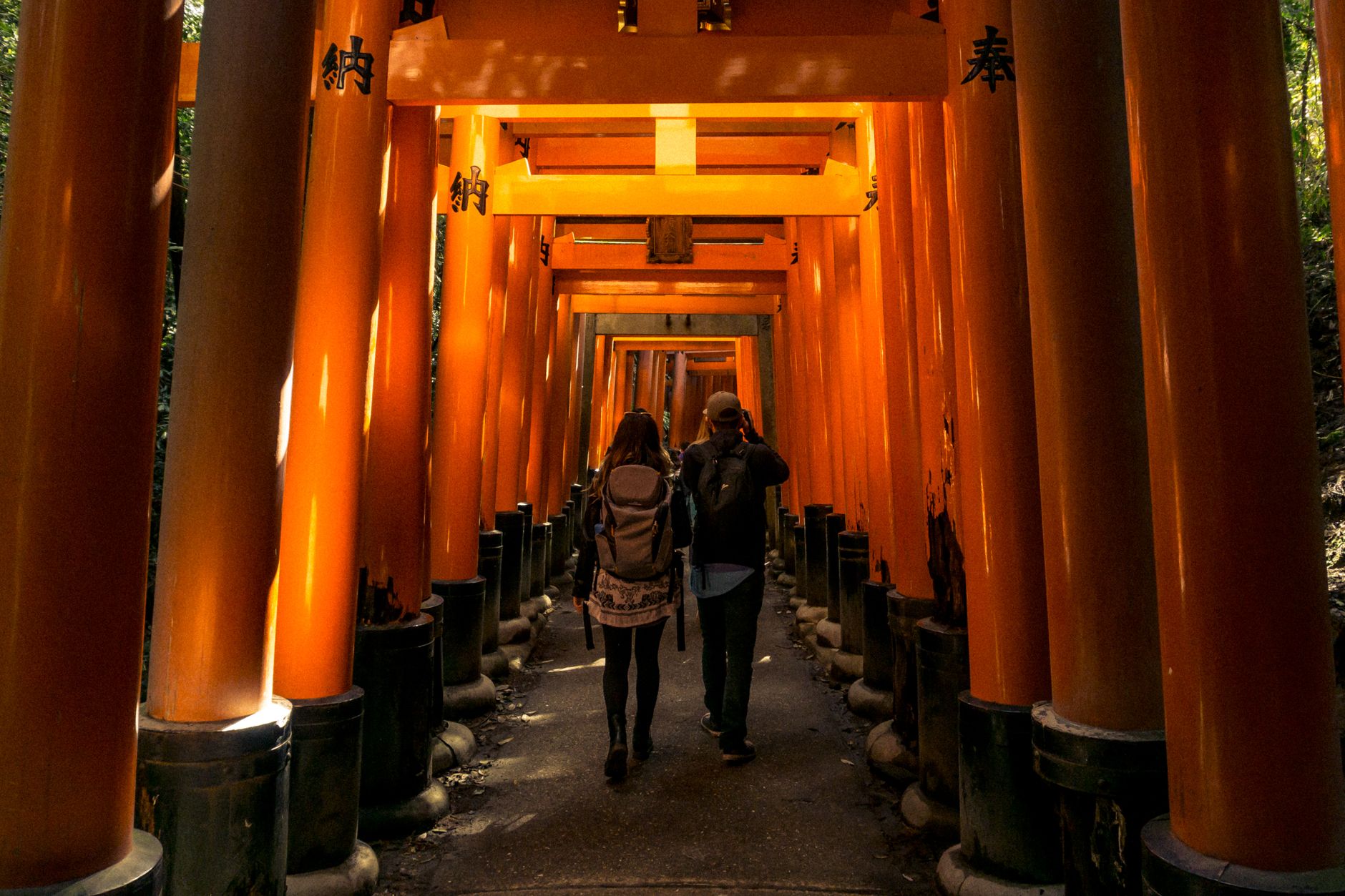
Thousands of vermilion torii gates form a tunnel winding 4km up Mount Inari. Each one was donated and inscribed with the donor's name, which is why the tunnels keep going long after most people have stopped photographing them. Use the receding lines of the gates to pull the eye into the frame, and shoot it vertically if you want the inscriptions legible.
The whole trick here is timing, and Fushimi Inari is unusually generous about it. There is no entrance and no gate, so it is free and open around the clock. Arrive before 7am and the lower path is close to empty; come after 8 pm and the lanterns are lit with almost nobody in them. From 9am to 5 pm the famous lower stretch is a queue. The upper trail is quiet at almost any hour, and the full loop takes 2 to 3 hours return, with sections that feel genuinely remote.
Getting there is five minutes from Kyoto Station on the JR Nara line to Inari, or the Keihan line to Fushimi-Inari, for €1.30 (¥210). Wear shoes you can climb in, and skip it in the July and August heat unless you are going at dawn.
2. Shibuya Crossing, Tokyo
The pedestrian scramble outside Shibuya Station moves up to 3,000 people at once under a wall of video screens. At street level it is a two-minute experience, and the honest advice is to do it twice: once by day, once after dark, when the screens are doing the lighting for you.
The photograph everyone wants is from above. Two options, and they are very different prices. The paid Shibuya Sky deck gives you the clean overhead frame. The free MAGNET rooftop gives you nearly the same angle for the cost of a drink, from about €3 (¥500). From either, a slow shutter turns the crowd into a smear against the static buildings, which is the shot that separates a Shibuya photograph from a Shibuya snapshot. A time-lapse from the same spot does the same job in motion.
Rain helps here more than anywhere else in Japan: wet asphalt doubles every sign in the frame.
3. Arashiyama Bamboo Grove, Kyoto

The bamboo path in Arashiyama is open ground, free, and open 24 hours, which matters because it is packed all day. Our Kyoto research is unanimous on one word: before sunrise. Not early. Before sunrise. By nine you are photographing other people photographing bamboo.
Shoot it vertically to get the height, and try a vertical panorama if you want the stems reaching properly out of frame. The light that makes this place work is a soft overhead beam coming down between the stalks, which happens for a short window and not at all on a flat grey day.
Arashiyama is 20 minutes west of the centre on the Hankyu or the JR line, and Hankyu Arashiyama station is a five-minute walk from the grove. If you want the same forest feeling with nobody in it, walk up to Otagi Nenbutsu-ji above Arashiyama, where 1,200 moss-covered stone figures sit among the trees and the crowd never reaches. It is the standard Kyoto answer for somewhere empty.
4. Mount Fuji from Lake Kawaguchi
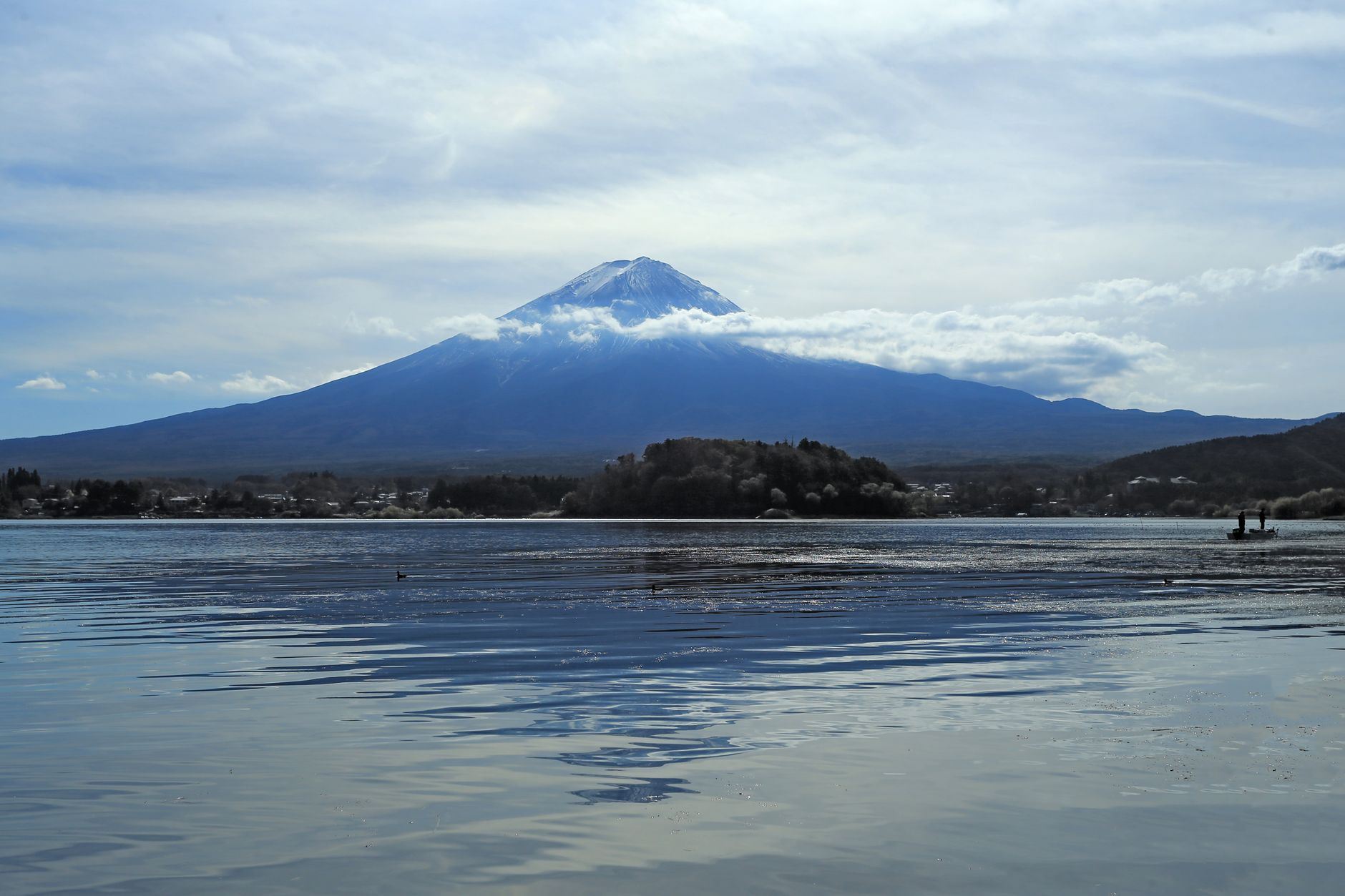
Start with the part most guides leave out: Mount Fuji is visible on a minority of days. Your odds are best from November to February and worst from April to August, and mornings before about 10am beat afternoons in every month of the year. Build a spare morning into the Fuji leg rather than betting one sunrise on it. This is one of Japan's biggest attractions and also the one most likely to hide from you.
Lake Kawaguchi gives you the reflection, and a still morning gives you a clean one, which happens rather less often than the photographs suggest. A telephoto lens compresses the scene and makes the cone loom over the shoreline, which is closer to how it feels in person than a wide shot is. Oishi Park on the north shore is the standard frame: lavender in summer, kokia in autumn, and the mountain straight across the water.
The other composition is the Chureito Pagoda above Fujiyoshida, pagoda in the foreground and Fuji behind, and it is the most reproduced image of Japan there is. It is 398 steps up from the park below, it is a war memorial rather than a temple, and it is first light or not at all. Get there on the Fujikyu train from Kawaguchiko to Shimoyoshida, 15 minutes, then the steps.
From Tokyo, the highway bus from Shinjuku to Kawaguchiko takes 1 hour 45 minutes at €13 to €14 (¥2,000 to ¥2,200) and beats the train on time, price and simplicity. Book it ahead in blossom and autumn season. A rail pass does not cover the last leg on the Fujikyu line either way. Once you are there, the retro sightseeing buses run colour-coded loops between the viewpoints with day passes, which is how you shoot several of them in one morning without a car.
If you want the summit rather than the view, that is a different trip with a permit attached. The 2026 climbing season runs 1 July to 10 September, the fee is €25 (¥4,000) on all four official trails, there is a cap of 4,000 climbers a day, an advance online reservation, a short e-learning module and gates closed overnight. Outside that window the trails are closed and the huts are shut. And the paradox worth knowing before you plan around it: the months you can climb are the haziest months of the year, and the months the air is clearest are the months the mountain is closed.
5. Itsukushima Shrine, Miyajima

The floating torii is two completely different photographs and the sea decides which one you get. At high tide the gate stands in water and appears to float. At low tide you can walk out across the flats and stand under it. Both happen twice a day, hours apart. Check a tide table before you choose your ferry, not after you arrive, because this is the one spot on the list where turning up at the wrong hour means the shot you came for is not available at all.
Sunset is the classic version, with the sky reflected off a calm tide. The other version almost nobody gets is dawn, and it needs you to sleep on the island: the day-trippers leave on the last ferries, the shrine is lit after dark, and the first Hiroshima boat does not land until well after sunrise. That is the whole argument for the overnight.
The island is free to walk. Itsukushima Shrine costs €2 (¥300), the ferry is €1.25 (¥200) each way and there is a €0.60 (¥100) visitor tax collected when you board. A combined shrine and treasure hall ticket is €3 (¥500). From Hiroshima Station it is 26 minutes on the JR Sanyo line to Miyajimaguchi, a two-minute walk and a ten-minute ferry, and you should allow 1 to 1.5 hours door to door.
Two practical warnings. The island's five-storied pagoda is fully enclosed in scaffolding until 20 December 2026, so do not plan a composition around it. And wear flat shoes for the shrine: the corridors have deliberate gaps between the floorboards to relieve pressure from the sea at high tide, and the shrine's own site warns that heels get caught. There are deer here as well as in Nara, and unlike Nara, feeding them is forbidden. They will still take a lens cloth out of an open bag.
6. Gion, Kyoto
Gion is the geisha district: preserved wooden machiya along Hanamikoji, lantern-lit lanes on the Shirakawa canal, and the kind of light at dusk that makes a phone camera look competent. Early evening is the hour, when the lanterns come on and there is still enough sky to hold detail. A shallow depth of field on a single lantern or a lattice facade gets you more than a wide shot of the whole street, which will have a coach party in it.
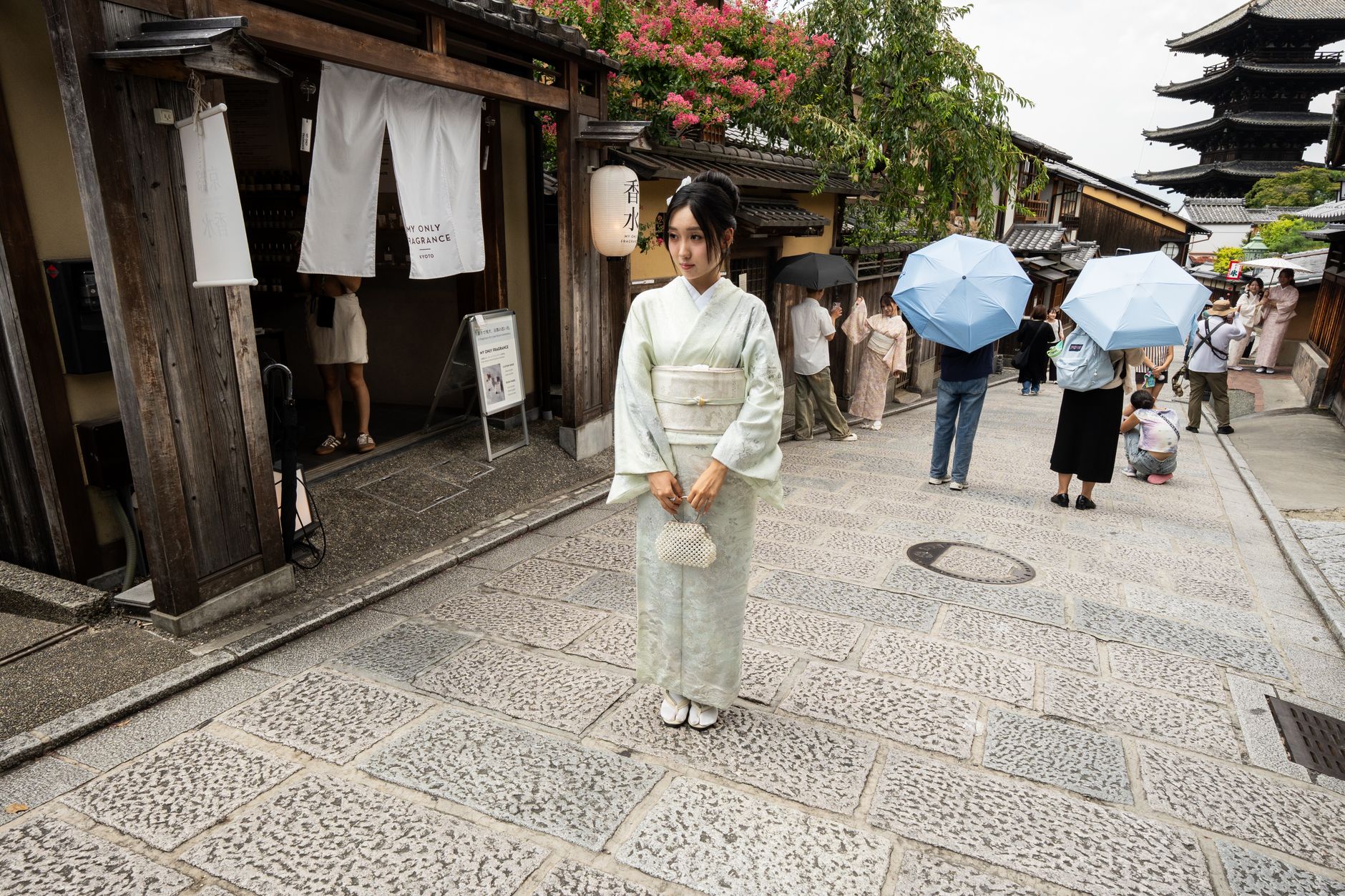
Read this before you point a camera anywhere in Gion: photography is banned on the private alleys. The restriction was introduced in response to visitor pressure, it is signposted, and it is enforced with fines. The public streets remain open. And the reason the ban exists in the first place is the second rule: do not photograph, follow or approach maiko and geiko. They are people going to work, not a subject. The lanes near Yasaka Pagoda in Southern Higashiyama are full of photo shoots from morning to night and are the right place to make photographs of people in kimono, with their consent.
7. The Great Buddha of Kamakura
The imposing outdoor bronze statue of Amida Buddha in Kamakura carries a sense of peace and grandeur that survives the crowd around it. A wide-angle lens captures the statue with its setting; putting a person in the frame is what gives a viewer the scale, and it is worth doing at least once. Late afternoon light is soft and comes in low across the site.
Kamakura is an hour from Tokyo on the JR Yokosuka line and it is covered by the rail pass, which makes it the easiest day trip in the region. Travellers who plan Japan with Stippl treat it exactly that way: almost nobody sleeps there. If you are shooting Tokyo for several days, this is the morning that gets you out of the city and back before dinner.
8. Tokyo Tower
Inspired by the Eiffel Tower and painted in the orange and white that aviation rules demanded, Tokyo Tower reads as a piece of colour in a mostly grey skyline. Night is when it earns its place on this list, lit against the city, and a narrow aperture turns each of those lights into a clean starburst. Look for its reflection in the glass of the office towers around it if you want a frame that is not the postcard.
The other reason to be here in winter: on a clear cold morning Mount Fuji shows on the horizon behind the city, and the alignment is one photographers wait months for. Observation decks in Japan generally run €13 to €21 (¥2,000 to ¥3,400), so budget in that band if you want to shoot from inside one rather than up at it from the street.
9. Himeji Castle
Himeji is the finest surviving original castle in Japan, undamaged and white, and the surrounding moat gives you a symmetrical reflection that no reconstructed castle in the country can match. The cherry blossom season adds the layer people come for, pink against the white plaster, and it is also when you share the grounds with everyone else. Walk the outer grounds before committing to the front-on shot: the angles from the side approaches are usually emptier and often better.
It is 45 minutes from Kyoto by shinkansen, which makes it a half-day rather than an expedition. Travellers plan it as a stop rather than a stay, and the numbers back that up: it has the shortest average stay of any place in our Japanese trip data.
10. Kenrokuen Garden, Kanazawa

Kenrokuen is one of Japan's three great gardens and its name means the Garden of the Six Sublimities, the six qualities Chinese landscape theory says cannot coexist in one place. Photographically it rewards detail over vista: the pruning of a single pine, the ripples on Kasumigaike pond, the stone lanterns along the gravel paths, the oldest fountain in the country throwing water 3.5m on nothing but the drop in elevation from a water system built in 1632.
Go at opening and you get it nearly empty. That is 7am from 1 March to 15 October and 8am from 16 October to the end of February. Arrive ten minutes before the gate. Entry is €2 (¥320), or €3 (¥500) with the castle next door, and it is free entirely during cherry blossom season.
Each season repaints it. November brings the colour, and January brings the version worth travelling for: the yukitsuri, the rope cones strung from poles to hold the pine branches up under snow, which go up every year before the first fall. Kanazawa is 2 hours 28 minutes from Tokyo on the Hokuriku Shinkansen at about €90 (¥14,380). From Kyoto it is roughly 2 hours with a mandatory change at Tsuruga since March 2024, which a lot of older guides still get wrong. The Loop Bus day pass is €5 (¥800). If this quieter, older Japan is what you are after, our guide to Japan's traditional cities goes deeper into Kanazawa and Takayama.
11. Omoide Yokocho, Tokyo

A lane of tiny bars and yakitori counters under the rail tracks in Shinjuku, most of them seating six people. It is one of two surviving alley-bar quarters in the ward, alongside Golden Gai, and it is the best night-photography subject in Tokyo that does not involve a skyscraper.
Shoot it after dark when the grills are going. The smoke is the picture: catch it rising through the lantern light and the frame has depth that a clean shot of the same alley does not. Warm tungsten, red lanterns and wet ground do most of the work; you mostly need to hold still and get low enough to see down the lane.
One thing to know before you sit down rather than walk through: some of these bars charge a cover and some do not admit newcomers at all. That is normal here rather than hostile, and it is not aimed at you personally. Ask before you photograph anyone inside a bar.
12. Akihabara Electric Town, Tokyo
Anime, manga, retro games and electronics stacked vertically, six storeys of signboard per building, with maid cafes in between. Akihabara is the one place in Japan where a fisheye or a very wide lens is the right call rather than a gimmick, because the subject is the sheer amount of visual information stacked above your head.
Night is when it works, when the signs are the only light source. Look up more than you look ahead, and try shooting straight up a building facade rather than down the street. Cosplayers and shop touts add a human element, and the same rule applies as everywhere: ask first.
13. Nachi Falls, Wakayama
Nachi Falls has a sheer drop of 133 metres and is the tallest in the country, and the classic composition pairs it with the vermilion three-storey pagoda that stands beside it. A rainbow forms in the spray on sunny days. A neutral density filter lets you drag the shutter in daylight and turn the water silky, which is the standard treatment and works well against the hard verticals of the pagoda.
It sits on the Kumano Kodo, one of only two UNESCO-listed pilgrimage routes on earth, and the five-day walking route through Nachi and Hongu is at its best in October and November, when the air is cool and dry and the typhoon season has passed. This is the most remote spot on this list by a distance, and it belongs to a trip built around the pilgrimage rather than to a Tokyo and Kyoto itinerary.
14. Nakamise Shopping Street, Tokyo
The approach to Senso-ji through the Kaminari-mon thunder gate and down the souvenir-lined Nakamise arcade is a feast for the senses and a nightmare at midday. A wide-angle lens takes in the stalls with the temple closing the far end of the street, which is the frame worth having.
Go first thing. The temple grounds open long before the shops on the approach do, so an early arrival gets you an empty arcade and a hushed plaza instead of a shuffling crowd, and the two are barely recognisable as the same place. Once the shutters are up, move in close: the traditional crafts and the snacks on the stalls make better detail shots than the street does at that hour. It is a short walk from Tokyo Skytree, so the two make one morning.
15. Okunoin Cemetery, Koyasan
Okunoin is surrounded by ancient cedars and holds a stillness that is hard to photograph and worth trying. Misty mornings are the version people remember, when the light comes through the trunks in bands and the moss-covered gravestones and statues fade in and out of it. Look for the interplay of light and shadow rather than a single subject: this is a place that works as an atmosphere, not as a monument.
Getting the morning means sleeping on the mountain, and that is its own experience rather than a logistics problem. Temple lodging at Koyasan is a distinct category of accommodation in Japan: a monastery room, the evening ceremony, morning prayer and Buddhist vegetarian food. It books out well ahead, so this is not a decision you make on the day.
16. Nara Park

Around 1,200 free-roaming sika deer live in Nara Park, treated as messengers of the gods, and the best photograph here is not the one you plan. A wide aperture with a deer in the foreground and the cedar avenue falling away behind it beats a portrait of a deer every time. The frame most people miss is the lantern avenue at Kasuga Taisha, thousands of moss-capped stone lanterns in deep green light with the deer moving between them.
Timing matters twice over. Todai-ji opens at 7:30am, the earliest major opening in the Kansai region, and the first half hour is close to empty. The deer are calmer in the morning too. By midday the young males are bolder, and they nip and snatch: keep crackers out of sight until you are ready, keep your bag closed and keep paper out of reach, because they eat maps. Crackers are €1 (¥150) for about ten, and the deer bow for them. Hold one overhead, then behind your back, then overhead again, and the older ones will bow three times before you hand it over.
Getting there is a choice between two lines. JR takes 45 minutes from Kyoto at €4.40 (¥700) and is free on the rail pass. Kintetsu takes 35 minutes and drops you nearer the park but is not covered. Either way it is a day trip, and Nara is designed around not staying, so do not book a bed. Our two weeks in Japan in spring route runs Nara from Kyoto on the same morning as Fushimi Inari at dawn, which is a long day and a good one.
17. Roppongi Hills, Tokyo
Roppongi is Tokyo's art quarter by day, with three major museums forming a walkable triangle, and it turns into a viewpoint at night. The observation deck gives you the panorama, and the thing that makes a Roppongi frame rather than a generic skyline is a long exposure: the traffic below turns into light trails and the towers stay sharp.
Blue hour is the window, that 20 minutes when the sky still has colour in it and the building lights are already on. Full night gives you black sky and less depth. Winter air is clearest, and the same €13 to €21 (¥2,000 to ¥3,400) observation-deck band applies here as everywhere else in Japan.
18. Hokkaido Lavender Fields
In summer, the hillsides around Biei and Furano bloom in colour-coordinated bands, and July is the month for the lavender specifically. The distant mountains give you a backdrop, and putting a person or a farm building in the foreground is what stops the frame reading as a flat field of purple.
Be honest with yourself about the geography before you plan around it. Hokkaido is a flight from Tokyo rather than a train ride, and visitor-only domestic fares from the Japanese carriers must be booked from outside Japan. It is also the one part of the country rated at its best from June through August, while Honshu is hot and humid, so this is not a detour from a Tokyo and Kyoto trip. It is either a second Japan trip or a summer holiday built around Hokkaido.
19. Hitachi Seaside Park, Ibaraki
Famous for its seasonal flowers, and above all for the blue nemophilas that cover the hills in late April and May, Hitachi Seaside Park is a canvas of changing colour through the year. A high vantage point across the flower fields with the sky behind them is the composition, and it is one of the few places on this list where an overcast day genuinely helps: flat light keeps the blue from blowing out and the sky from competing.
Play with the colour contrast in post rather than in camera, because the fields are already saturated and the temptation to push them further is real.
20. Kinkaku-ji (Golden Pavilion), Kyoto
A Zen temple whose top two storeys are covered in gold leaf, mirrored in the pond it stands beside. The postcard shot is from the near bank and everyone takes it, which is fine, because it is genuinely the best angle. A polarising filter cuts the surface reflection on the water and deepens the gold, and it is the one filter that makes a visible difference here.
Be realistic about the visit. It opens at 9am and closes at 5 pm, entry is €3 (¥500), the route is a one-way loop of 30 to 45 minutes, you cannot go inside the building, and it is never quiet. Arriving at opening is what separates a good visit from a slow shuffle, because the coach groups build through the morning. Morning light before noon is also when the reflection actually works.
Kyoto Station to Kinkaku-ji is about 40 minutes on bus 101, 102, 204 or 205 for €1.45 (¥230), or 10 minutes by taxi at €6 to €8 (¥1,000 to ¥1,200). Pair it with Ryoan-ji and its dry rock garden, a 15-minute walk away, and you have a natural north-west half-day.
Two places where photography is restricted
Most of Japan is relaxed about cameras. Two of the places on this list are not, and both restrictions exist for the same reason: too many photographers behaved badly in someone else's neighbourhood.
Gion's private alleys, Kyoto. Photography is banned outright on the private lanes, signposted and enforced with fines. The public streets are still open. The ban came in because visitors were chasing maiko and geiko down those alleys for pictures. Do not follow them, do not block them and do not photograph them without asking. If you want people in kimono in your frames, Southern Higashiyama near Yasaka Pagoda is full of willing subjects at rented-kimono photo shoots all day.
The Fuji viewpoints, Fujikawaguchiko. In April 2024 the town put up a screen 2.5m by 20m in front of a convenience store to stop crowds photographing Mount Fuji above its roof. Visitors cut holes in the screen and it was reworked in August 2025. Mount Fuji has become Japan's overtourism emblem and the town's response has been signs, marshals and barriers. The photo spots here are in people's actual streets: stand on the pavement, not in the road, and do not stand on private property.
Two smaller ones worth having in mind. Temples and shrines are working religious sites, so no flash inside halls and keep quiet. And at Nara and Miyajima the deer will genuinely take a lens cloth, a map or a ticket out of an open hand.
The Japanese photography calendar
The country-wide answer is late March to May and October to November. But the spots on this list do not all agree with that, and a few of them actively disagree.
- Mount Fuji: go in winter. November to February gives the clearest air and the best odds of the mountain being there at all. April to August is the worst window, which is awkward, because that is when most people visit.
- Cherry blossom: late March to mid April, about a week per location, opening in Tokyo in the last days of March, Kyoto in the first week of April and Sapporo in late April. Because it moves by up to two weeks year to year, our spring itinerary of Japan plans around the season rather than a date, which is the only honest way to do it.
- Autumn colour: the second half of November in Kyoto and Tokyo, earlier as you go north or higher. This is the connoisseur's season: as spectacular as blossom, with a longer window, lower prices and fewer people.
- Snow: January and February. Kenrokuen under its rope cones, Takayama's Edo rooftops, Golden Gai under a rare Tokyo fall. Winter is also the cheapest season and the clearest.
- Hokkaido's flower fields: July. The rest of the country is hot, humid and hazy then, which is exactly why Hokkaido gets its own trip.
- Avoid three dates entirely. Golden Week (29 April to 5 May), the New Year week when much of the country closes from around 29 December, and Obon in mid August. All three are domestic travel peaks when trains and beds sell out months ahead.
One more piece of timing, from our own numbers. October is the single busiest month travellers plan to start a Japan trip, ahead of April, and autumn as a whole edges spring. Everyone talks about cherry blossom; a slightly larger share of travellers quietly plan around the leaves, and the leaves give you a fortnight rather than a week.
What a photography trip in Japan costs
Here is the part that surprises people: the spots are cheap and moving between them is not.
Temple and garden entry across the country clusters at €2.50 to €6 (¥400 to ¥1,000). Observation decks run €13 to €21 (¥2,000 to ¥3,400). And a long list of the best frames on this page costs nothing at all: Fushimi Inari, the bamboo grove, Nara Park, Gion's public streets, Senso-ji, Omoide Yokocho, Akihabara and every viewpoint around Lake Kawaguchi. A full day of shooting in Japan can land well under €20.
Our own numbers say the same thing from the other direction. Travellers who plan their Japan trip with Stippl log a typical sight or landmark at €7.50 (¥1,200) and a bigger tour or attraction at €24 (¥3,800). A single train fare comes in at €25 (¥3,950), which makes it the third-largest recurring cost of a Japan trip after a hotel booking and a flight. The tickets on this page are the small line. The shinkansen between them is the big one.
That has a direct consequence for a photography route: the order you shoot these places in has a real price attached. Tokyo to Kyoto is €88 (¥14,000). Osaka to Hiroshima is €66 (¥10,500). Zigzagging back for a second attempt at a shot you missed costs roughly what the whole day of shooting cost.
How to string the spots into one route
Twenty spots, five clusters, and the clusters are what decide the trip.
- Tokyo and the bay. Shibuya Crossing, Tokyo Tower, Omoide Yokocho, Akihabara, Nakamise and Roppongi Hills are all inside the city, and Kamakura is an hour out on the JR line. Mount Fuji sits under two hours away, so it attaches to Tokyo rather than standing alone.
- Kansai. Fushimi Inari, the bamboo grove, Gion and Kinkaku-ji are all in Kyoto. Nara is 45 minutes away and Himeji another 45 in the other direction, so four of the twenty are reachable from one bed.
- The west. Miyajima's floating torii, 45 minutes from Hiroshima by train and ferry.
- The Alps. Kenrokuen in Kanazawa, 2 hours 28 minutes from Tokyo on the Hokuriku Shinkansen.
- The outliers. Nachi Falls in Wakayama, Okunoin at Koyasan, Hitachi Seaside Park north of Tokyo, and the Hokkaido flower fields, which are a flight.
Three shapes, depending on how long you have. One week: Tokyo, Mount Fuji, Kyoto. That gets you eight of the twenty, and Hiroshima does not fit, so do not try. Two weeks: add Nara, Himeji, Hiroshima and Miyajima and you are at twelve, which is the classic route and the one most people should shoot. Two weeks with the Alps instead: trade Hiroshima and Miyajima for Kanazawa and Takayama, which is a fair swap if this is not your first trip. Our list of the ten attractions worth planning around and our 10 best places to visit in Japan both work through the same geography from a different angle.
Now the honest part, and it comes from our own trip data. A Japan trip is typically 17 days with about nine stops, which works out at a new place every 1.8 days, and nearly a third of all stops are a single night. Japan gets planned as a moving trip in a way that almost no other country does, and the rail network is why. For a photographer that is the whole problem in one sentence: one night at a spot means one sunrise, and if the cloud is wrong there is no second attempt. Two nights somewhere is two mornings, and two mornings is what a photograph of Mount Fuji actually costs.
Describe your trip, get a Japan itinerary in seconds
Everything in this guide is already in Stippl. Tell the planner how long you have and what you like: it builds the route, the days and the travel times, and you edit whatever you want.
Frequently asked questions about Japan
The twenty in this guide, and if you only have room for five, make them Fushimi Inari at dawn, the Arashiyama bamboo grove before sunrise, Mount Fuji from Lake Kawaguchi on a clear morning, the floating torii at Miyajima on a rising tide, and Kenrokuen in Kanazawa at opening. Four of those five are free.
Early, and earlier than you think. Todai-ji in Nara opens at 7:30am, Kenrokuen at 7am from March to mid October, and the ungated spots (Fushimi Inari, the bamboo grove, Gion's streets) have no opening hour at all. Mount Fuji is best before 10am. The neon ones want full dark.
Late March to mid April for cherry blossom, the second half of November for autumn colour, and November to February if Mount Fuji is the reason you are going. November is the strongest single answer: the colour lasts a fortnight rather than a week and the prices are lower. Avoid Golden Week and mid August.
Yes, two on this list. Photography is banned on the private alleys of Gion in Kyoto, signposted and enforced with fines, and you should not photograph or follow maiko and geiko anywhere. At the Mount Fuji viewpoints in Fujikawaguchiko the town has put up screens to stop crowds shooting from the street. Inside temple and shrine halls, no flash.
Three answers. The Chureito Pagoda for the classic pagoda-and-cone composition, Lake Kawaguchi for the reflection, and Oishi Park on the north shore for the mountain across open water with flowers in the foreground. All three need a clear morning, which happens on a minority of days, so give the Fuji leg two nights rather than one.
Save these to your trip in Stippl and they are on your map before you land.
The hard part of a Japan photography trip is not choosing the spots, it is putting them in an order that gives you a morning at each one. Drop the spots you want into a Stippl trip and it builds the route around them, with the train times and the day-by-day already in place, so you can see straight away which mornings you have and which ones you have quietly given away. Free forever.