

What follows is not just the list. You will also find how these attractions group geographically, how long each one actually takes, what it costs to get in, when to go, and how to fit them into a route that does not have you crossing the country twice.
Plan Japan in Stippl
Day-by-day planning, stays and budget in one app, with every place from this guide already on the map.
Download the appJapan's attractions at a glance
Before the detail, the whole answer in one table. Prices are per adult and converted at about €0.86 (¥160) to the euro.
| Attraction | Where | Allow | Entry | Go when |
|---|---|---|---|---|
| Tokyo Skytree | Tokyo (Sumida) | 2 hours with the shopping complex below | Paid, in the €13-21 (€11 (¥2,000)-3,400) band Japanese observation decks charge | Sunset, booked ahead |
| Fushimi Inari Shrine | Kyoto | 30 minutes for the famous lower gates, 2-3 hours for the summit loop | Free, no gate, open 24 hours | Sunrise or after 8 pm |
| Mount Fuji | Fujikawaguchiko and Fujiyoshida, near Tokyo | A full day for the viewpoints, two days to climb | Free to view, €25 (€22 (¥4,000)) fee to climb | November to February for visibility, before 10 am |
| Hiroshima Peace Memorial Park | Hiroshima | 2-3 hours for the park and museum together | Park free, museum charges | Weekday, from 8 am when the museum opens |
| Osaka Castle | Osaka | 2 hours including the park | Park free, keep charges | Early April for blossom, mornings otherwise |
| Nara Park and Todai-ji | Nara | Half a day | Park free, Great Buddha Hall charges | Todai-ji opens 7:30 am and the first half hour is empty |
| Kinkaku-ji | Kyoto | 30-45 minutes | €3 (€2.70 (¥500)) | Opening time, 9 am |
| Shikisai-no-Oka | Biei, Hokkaido | Half a day with the surrounding area | Fields free, tractor rides charge | July to October |
| Odaiba | Tokyo Bay | Half a day | Free to walk, individual attractions charge | Any afternoon into the evening |
| Takayama old town | Gifu, Japanese Alps | Overnight, ideally | Streets and markets free, Jinya €3 (€2.38 (¥440)) | Before 9 am, or in winter snow |
Two things this table says that a list of ten cannot. The cheap ones are not the lesser ones: Fushimi Inari, Nara Park, the Peace Memorial Park and Takayama's streets are all free, and all unmissable! And almost every one of them is better before nine in the morning.
How Japan's attractions actually group
Ten attractions, four clusters. This is the part that decides your trip, because in Japan the places are close together and the gaps between clusters are long and expensive.
- Tokyo and the bay. Tokyo Skytree and Odaiba, plus every landmark in the Tokyo section further down. Mount Fuji and Hakone sit within two hours, so they attach to Tokyo rather than standing alone.
- Kansai. Kyoto's Fushimi Inari and Kinkaku-ji, Nara Park, Osaka Castle. Kyoto to Osaka is 15 minutes by shinkansen and Kyoto to Nara is 45 minutes on a local train, so all four are reachable from one bed.
- The west. Hiroshima's Peace Memorial Park, with Miyajima and its floating torii 45 minutes away by train and ferry. Osaka to Hiroshima takes 1 hour 25 minutes by shinkansen.
- The outliers. Takayama in the Gifu mountains, 2 hours 20 minutes by limited express from Nagoya, and Shikisai-no-Oka in Hokkaido, which is a flight rather than a train.
How long each base needs, which is the question the clusters really answer: Tokyo takes four to five days on a first visit, Kyoto three at a minimum plus a full day for each day trip, Osaka two to three, Hiroshima two (one for the city, one for Miyajima), Takayama two nights, and Mount Fuji one. Nara is a day trip and is designed to be one, so do not book a bed there.
One pairing rule that saves people a wasted night, and it comes straight out of our own trip data: Mount Fuji and Hakone are alternatives, not a pair. They are the strongest substitution we have measured anywhere in our data. More than eight in ten Fuji trips carry no Hakone stop, and the reverse holds just as firmly. Both give you an onsen night and a Fuji view within two hours of Tokyo. Pick one.
The practical upshot: on a first trip of two weeks, the Tokyo, Kansai and Hiroshima clusters are the classic route and Takayama is the natural detour if you want the Alps. Hokkaido is a separate holiday, not a side trip. Most travellers who plan Japan with Stippl reach the same conclusion on their own, which is why almost every route we see stays on the main island.
1. Tokyo Skytree

At 634 metres, Tokyo Skytree is the tallest structure in Japan. The two observation decks, Tembo Deck at 350m and Tembo Galleria at 450m, give genuinely different views. On clear days you can see Mount Fuji to the southwest.
Book timed tickets online a few days ahead, and visit at sunset to catch the city switching from daylight to the lit-up evening sprawl. A combined ticket for both decks costs more, and the upper Galleria is the one worth the upgrade if you are only going once. Japanese observation decks run €13 to €21 (€11 (¥2,000)-3,400), so budget towards the top of that if you want both levels.
Allow longer than you think. Tokyo Solamachi at the base holds more than 300 shops and restaurants, and Senso-ji in Asakusa is a short walk away, which makes the whole of eastern Tokyo one easy half-day rather than a detour for a lift ride.
2. Fushimi Inari Shrine, Kyoto

The thousands of vermilion torii gates at Fushimi Inari form a trail winding up Mount Inari for 4km. Each gate was donated and inscribed with the donor's name, which is why the tunnels keep going long after the photographs stop. The lower section is crowded from 9am to 5pm. The upper trail is quiet at almost any time, and the full hike, 2 to 3 hours return, has sections that feel genuinely remote.
There is no entrance and no gate, so it is free and open around the clock. That is the whole trick: arrive before 7am to walk the lower path without crowds, or come after 8 pm when the lanterns are lit and the tunnels are close to empty. The famous lower stretch takes about 30 minutes on its own. Wear comfortable shoes, because it gets steep, and skip it altogether in the July and August heat unless you are going at dawn.
Getting there is five minutes from Kyoto Station on the JR Nara line to Inari, or the Keihan line to Fushimi-Inari, for €1.30 (€1.14 (¥210)).
3. Mount Fuji
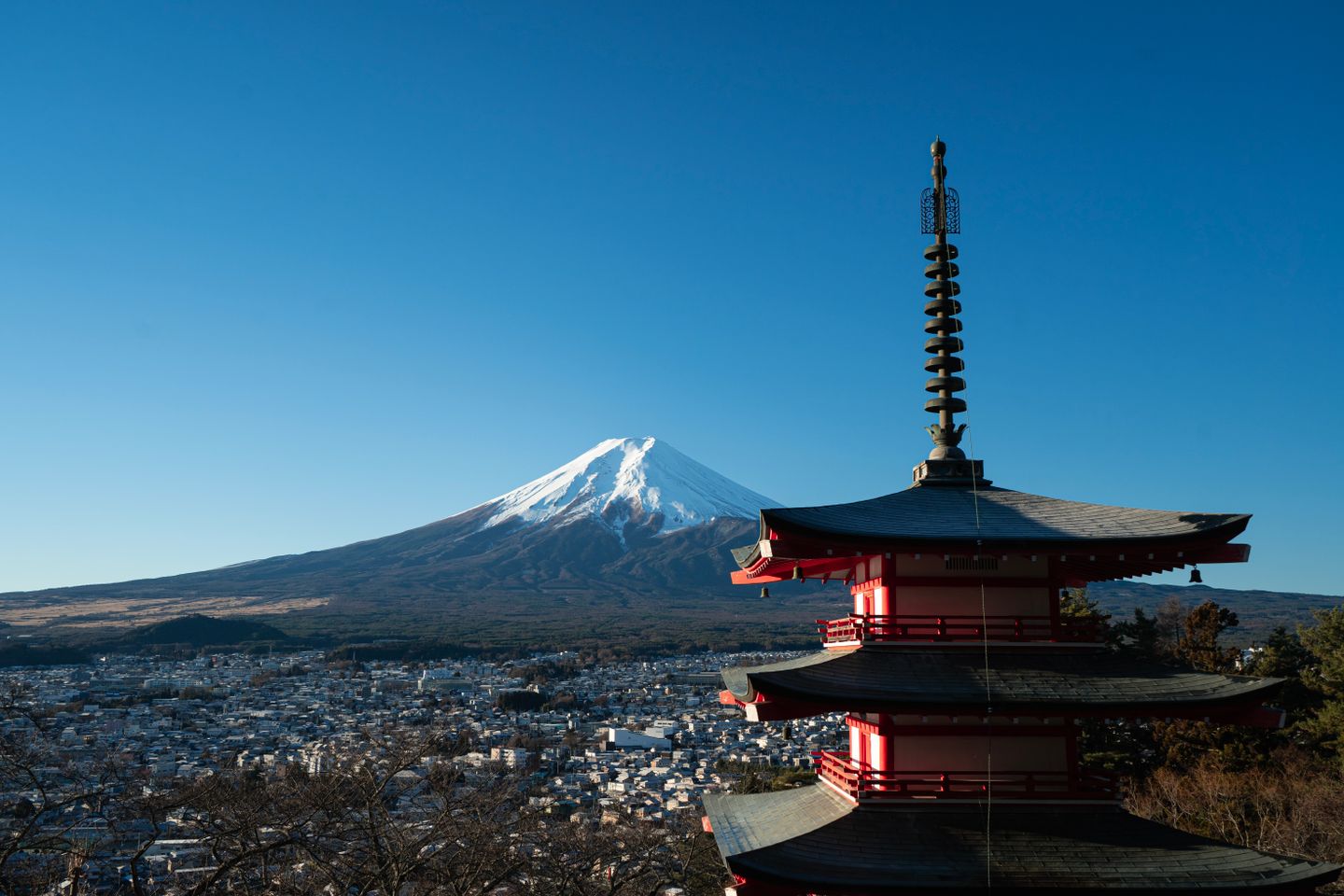
Mount Fuji is a 3,776-metre volcano, and UNESCO listed it in 2013 as a cultural property rather than a natural one, across 25 separate component areas. That tells you something about how Japan sees it.
The official climbing season for 2026 runs from 1 July to 10 September. Outside that window the trails are closed, the mountain huts shut and the routes are genuinely dangerous. Climbing now costs €25 (€22 (¥4,000)) on all four official trails, with a cap of 4,000 climbers a day, an advance online reservation, a short e-learning module before you go and gates closed overnight. This is not a spontaneous decision, and the rules changed for 2026, so check the official site rather than an old guide.
Budget more than the permit. A night in a mountain hut with meals runs €50-95 (€43 (¥8,000)-15,000), and that is before transport. If you are climbing, start late at night to summit at dawn, which avoids the afternoon heat and the worst of the queues. The Yoshida Trail is the most popular and has huts for rest stops and gear rental.
For the rest of the year, Fuji is a view rather than a climb, and the honest warning is that it is visible on a minority of days. Your odds are best from November to February and worst from April to August, and mornings before about 10am beat afternoons in every month. Build a spare day into the Fuji leg rather than betting one afternoon on it, which is how our 14-day spring route handles its Hakone day.
The classic shot is from the Chureito Pagoda above Fujiyoshida: pagoda in the foreground, Fuji behind. It is 398 steps up from the park below, it is a war memorial rather than a temple, and it is first light or not at all. Getting there is 15 minutes on the Fujikyu train from Kawaguchiko to Shimoyoshida, then the steps.
From Tokyo, the highway bus from Shinjuku to Kawaguchiko takes 1 hour 45 minutes at €13-14 (€11 (¥2,000)-2,200) and beats the train on time, price and simplicity. Book it ahead in blossom and autumn season, when seats sell out and the road queues.
4. Hiroshima Peace Memorial Park

The park is built on the flattened Nakajima merchant district, at the hypocentre of the 1945 atomic bombing. The Atomic Bomb Dome stood about 160 metres from the hypocentre and was the only structure near it left standing; it was deliberately preserved as a ruin and is now a UNESCO World Heritage Site.
The core memorial sites are all free: the Dome, the hypocentre, the Cenotaph and the Children's Peace Monument. Only the Peace Memorial Museum charges. It opens at 8am, which is earlier than most Japanese museums, and every account of it says the same two things: allow two hours minimum, and do not schedule anything demanding afterwards. Two to three hours covers the park and the museum together.
This is a memorial rather than an attraction, and visitors treat it that way. Come on a weekday morning, before the school groups arrive in the afternoon.
From Hiroshima Station, the streetcar takes about 15 minutes and stops at Genbaku Dome-Mae. From Kansai, the shinkansen from Shin-Osaka is 1 hour 25 minutes at €70 (€60 (¥11,150)), free on a Japan Rail Pass, which is why Hiroshima works as a long day trip as well as an overnight.
Pair it with Miyajima, 45 minutes away by train and ferry, where Itsukushima Shrine's torii appears to float at high tide.

The island itself is free to walk. Itsukushima Shrine costs €2 (€1.62 (¥300)), the ferry is €1.25 (€1.08 (¥200)) each way and there is a €0.60 (€0.54 (¥100)) visitor tax collected when you board. A combined shrine and treasure hall ticket is €3 (€2.70 (¥500)). Wear flat shoes: the shrine's corridors have deliberate gaps between the floorboards to relieve pressure from the sea at high tide, and the shrine's own site warns that heels get caught.
Two things to check before you go. The torii floats at high tide and can be walked out to at low tide, twice each per day, so look at the tide table before you pick a ferry rather than after you arrive. And the island's five-storied pagoda is fully enclosed in scaffolding until 20 December 2026, so do not plan a photograph around it. There are deer here too, and unlike Nara, feeding them is forbidden.
5. Osaka Castle

Built in 1583 and destroyed by war, fire, earthquake and typhoon in turn, what stands today is a 1931 reconstruction on the original stone base and moats. The keep holds a museum covering the castle's history and Osaka's role in the unification of Japan, with an observation deck on top.
The park and moats are free and only the keep charges, which is worth knowing because the park is where locals actually spend their time. It is one of the city's best cherry blossom spots, so expect real crowds in early April. Osaka's sight entry is cheap by European standards generally: most temples and observatories run €2-5 (€1.62 (¥300)-800).
The grounds and the exterior view are the real draw. Combine the castle with Dotonbori in the evening for a full Osaka day, or with Universal Studios Japan on the bay if you are travelling with children, which is the one attraction here that swallows an entire day on its own.
6. Nara Park

Nara Park was established in 1880 and runs east from the two stations to the foot of the hills. Around 1,200 free-roaming sika deer live in it, treated as messengers of the gods, and they bow for shika senbei crackers sold from stalls throughout the park. The crackers cost about €1 (€0.81 (¥150)) for ten, and breaking them up makes them last. Keep any other food and loose paper out of sight, because the deer take both.
The park is free, and so is most of Todai-ji at its northern end, home to a bronze Great Buddha unveiled in 752 in one of the largest wooden buildings on earth. Only the Great Buddha Hall charges. Kofuku-ji, Kasuga Taisha and the museums are all inside the same park, which is why the whole visit works on foot.
Todai-ji opens at 7:30am, the earliest major opening in the Kansai region, and the first half hour is close to empty. Use it. The deer are calmer in the morning too, and by midday they are bolder: the older ones are the polite ones, the young males nip and snatch. Do not eat your lunch in the park with deer nearby, and keep maps in your bag, because they eat those too.
Getting there is a choice between two lines. Kintetsu takes 35 minutes from Kyoto or from Osaka Namba and drops you nearer the park, but it is not covered by the Japan Rail Pass. JR takes 45 minutes from Kyoto at €4.40 (€3.78 (¥700)) and 40 to 50 minutes from Osaka Station, and it is free on the pass. Ten minutes against a free ride, and either way it is the classic day trip from both cities: our two weeks in Japan in spring runs it from Kyoto on the same morning as Fushimi Inari at dawn. Nara is designed around not staying, so do not book a bed here.
A nice detail two of our sources landed on independently: they arrived expecting to be underwhelmed by the day trip and left calling Todai-ji the best temple of their entire Japan trip!
7. Kinkaku-ji (Golden Pavilion), Kyoto

A Zen Buddhist temple whose top two storeys are covered in gold leaf, mirrored in the pond it stands beside. Entry is €3 (€2.70 (¥500)) and it opens at 9am.
Be realistic about it: the route is a one-way loop of about 30 to 45 minutes, you cannot go inside the building, and it is never quiet. The path is one-directional and the crowd moves steadily, so it rarely feels stuck, but arriving at opening is what separates a good visit from a slow shuffle, because coach groups build through the morning. Morning light before noon is also when the reflection in the pond works.
Combine it with Ryoan-ji and its famous dry rock garden, a 15-minute walk away. Ninna-ji is nearby too, and the three together make a natural north-west half-day, which is exactly how our Kyoto research sequences a second day in the city. Kyoto Station to Kinkaku-ji is about 40 minutes on bus 101, 102, 204 or 205 for €1.45 (€1.24 (¥230)), or 10 minutes by taxi at €6-8 (€5.41 (¥1,000)-1,200). One thing that catches people out across Kyoto generally: many temples close between 5pm and 6pm with last admission before that, so an afternoon plan runs out of daylight sooner than you expect.
8. Shikisai-no-Oka Flower Fields, Hokkaido
In Biei, Hokkaido, Shikisai-no-Oka is a hillside farm with colour-coordinated rows of flowers that bloom from July through October. Lavender peaks in late June to mid-July, sunflowers in August and cosmos in September. The fields are free to walk and fees apply for the tractor rides.
Rent a bike to cover the broader Biei area, because the famous patchwork quilt fields extend well beyond this single site. The nearest city is Asahikawa, 30 minutes away by car.
Be honest with yourself about the geography before you commit. Hokkaido is a flight from Tokyo rather than a train ride, and everything else on this list sits on the main island. This is the attraction that belongs to a second Japan trip, or to a summer holiday built around Hokkaido's national parks rather than its cities.
9. Odaiba, Tokyo

An artificial island in Tokyo Bay, reached by the Yurikamome monorail from Shimbashi, with malls, the National Museum of Emerging Science (Miraikan), a life-size Gundam statue, a beach and views back across the water to Rainbow Bridge. Touristy, and genuinely fun with children.
Take the monorail rather than a taxi: the ride itself gives you the bay and the bridge on the way in, and it is the cheapest sightseeing in Tokyo. Come in the afternoon and stay for blue hour, when Rainbow Bridge lights up.
One correction worth making, because plenty of guides still get it wrong: the teamLab digital art museums are no longer here. Borderless has moved to the Azabudai Hills complex and Planets is in Toyosu. Both are covered in the Tokyo landmarks section below, and both need tickets booked well ahead.
10. Takayama's Historic Old Town
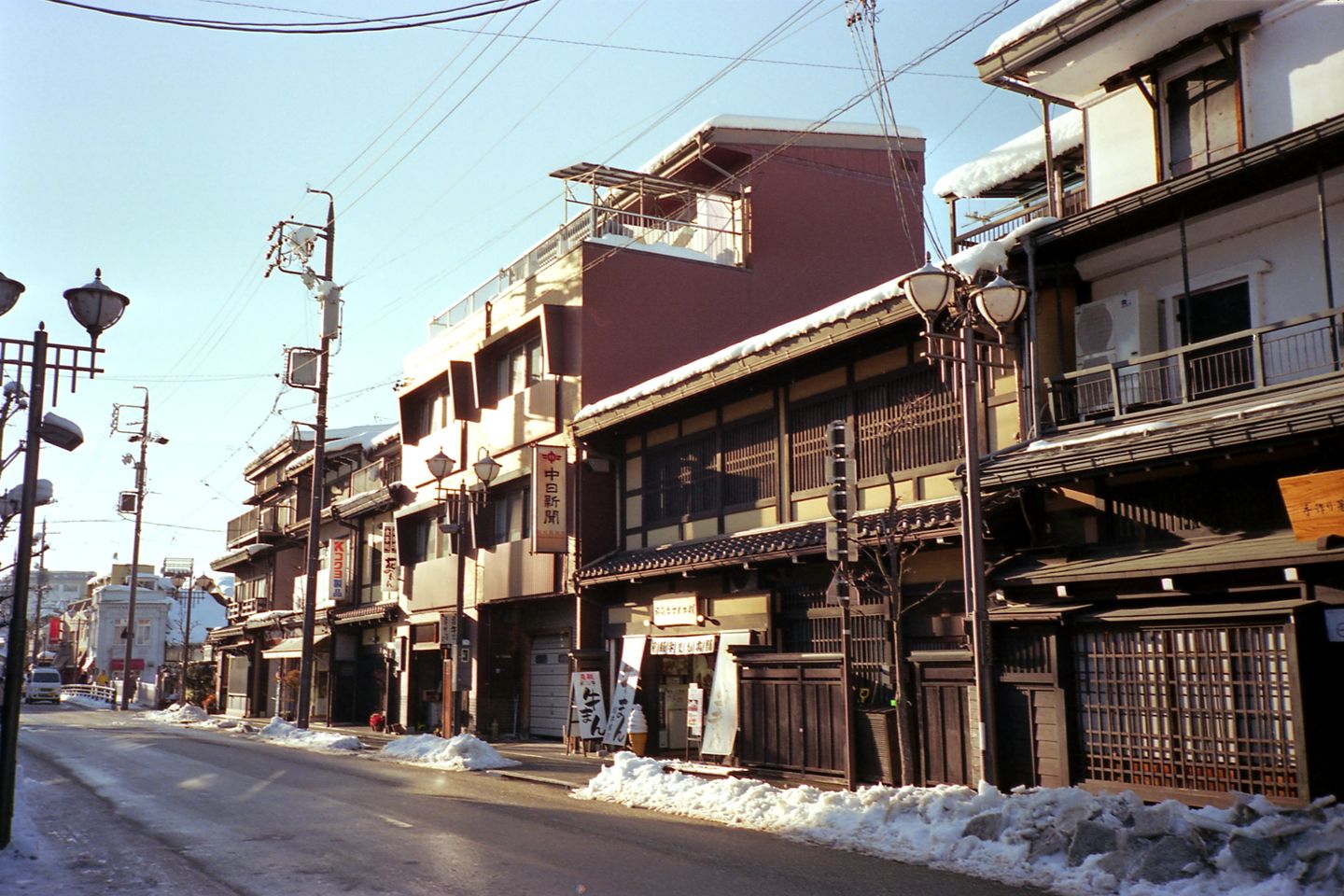
Takayama, in the Japanese Alps of Gifu Prefecture, kept its Edo-period merchant district intact because it was too remote to bomb and too poor to redevelop. The Sanmachi quarter is three streets of dark-timber merchant houses that are still in use, with sake breweries and miso shops among them.
Takayama Jinya is the thing no other town has: the only surviving provincial government house of the Tokugawa shogunate anywhere in Japan, complete with its rice storehouse and its interrogation room. Entry is €3 (€2.38 (¥440)). Two morning markets run every single day of the year, Miyagawa along the river and Jinya-mae in front of the government house, from 7am to noon between April and November and from 8am in the winter months. They are a working food scene rather than a souvenir row: produce, pickles, miso and dango.
The old town, both markets, the river walk and the Higashiyama temple course are all free, and the Hida Folk Village, an open-air museum of thatched-roof houses, costs €4.40 (€3.78 (¥700)). Walk Sanmachi before nine, while the merchant streets still belong to the town rather than the coaches, because the day-trip buses from Nagoya arrive mid-morning.
If you can pick your dates, the Takayama festival runs on 14 and 15 April and again on 9 and 10 October, and unlike a lot of Japanese festivals these are fixed dates rather than lunar ones. It is counted among the three most beautiful festivals in the country, and the floats are on display at the exhibition hall the rest of the year.
Stay overnight if you can, because the town is at its best in the early morning and the evening once the day visitors have gone. It is 2 hours 20 minutes from Nagoya on the JR Hida limited express, covered by the rail pass, or about 4 hours 30 minutes from Tokyo via Nagoya. Winter, with snow on the rooftops, is the atmospheric season. If this is the Japan you are after, our guide to the most beautiful traditional cities in Japan goes deeper into Takayama, Kanazawa and the rest.
The Tokyo landmarks that did not make the ten
Ten places cannot hold Tokyo. These are the city's other headline attractions, and several of them are free, which makes them the best value on this whole page.
Shibuya Crossing. The pedestrian scramble outside Shibuya Station, where by some counts up to 3,000 people cross at once under a wall of video screens. It is free, always open, and honestly a two-minute experience at street level. Do it twice: once by day, once after dark. Then see it from above, either from the paid Shibuya Sky deck or the free MAGNET rooftop, where a drink from about €3 (€2.70 (¥500)) buys you the same view.
Meiji Jingu. Tokyo's largest Shinto shrine, built in 1920 in memory of Emperor Meiji and Empress Shoken, sitting inside 70 hectares of planted woodland immediately behind Harajuku. Entry to the grounds is free. Walk the whole forest approach rather than heading straight for the buildings, because the approach is the point: the city noise drops away within a minute of the entrance torii. Allow 30 to 60 minutes, and go on a misty morning if you get one.
Senso-ji, Asakusa. Founded in 645 AD, Tokyo's oldest temple, reached through the Kaminari-mon thunder gate and the souvenir-lined Nakamise-dori arcade. Free to enter. The grounds open at 6am and the Nakamise shops open around 9 or 10, so an early arrival gets you an empty approach and a hushed plaza instead of a slow-moving crowd. It is a short walk from Tokyo Skytree, so the two make one morning.
The Imperial Palace East Garden. Built on the innermost circles of Edo Castle, open to the public year-round and free, unlike the palace itself, which needs an advance-booked tour. The Ninomaru strolling garden inside turns red with maples in autumn, and the moats and walls are among the last visible remnants of the old castle. It is the quietest place in central Tokyo, which is not a claim you get to make often.
teamLab Borderless and teamLab Planets. Two separate digital art museums, not two branches of one. Borderless, now at Azabudai Hills, holds more than 70 installations with no fixed path between them and costs €24 (€21 (¥3,800)). Planets, in Toyosu, is barefoot and physical, with a room of ankle-deep water, and costs €20 (€17 (¥3,200)). Both sell out daily, so book timed tickets online well ahead. Two things worth knowing: Borderless closes on the first and third Tuesday of the month, and Planets is scheduled to close permanently at the end of 2027.
The Ghibli Museum, Mitaka. Designed by Hayao Miyazaki, with props, dioramas, a replica of his own desk, a rooftop guarded by the giant robot from Laputa and a small theatre screening short films you cannot see anywhere else. No photography inside, which is the point. Allow two to three hours. Getting in is the hard part: tickets go on sale on the 10th of the month for the following month, there is no box office, and they sell out within minutes. Pair it with Inokashira Park nearby, since you are already out west.
What Japan's attractions cost
Here is the thing that surprises people: the attractions are cheap and getting to them is not.
Temple and garden entry across the country clusters at €2.50 to €6 (€2.16 (¥400)-1,000), with a second tier around €9 to €13 (€8.11 (¥1,500)-2,000) for the bigger complexes and combined tickets. Observation decks run €13 to €21 (€11 (¥2,000)-3,400). A great many of the headline sights charge nothing at all: Fushimi Inari, Nara Park, most shrine precincts, the Peace Memorial Park, Takayama's streets and markets, the Arashiyama bamboo grove. A full day of sightseeing in Japan can land well under €20.
Our own numbers say the same thing from the other direction. Travellers who plan their Japan trip with Stippl log a typical sight or landmark at €7.50 (€6.49 (¥1,200)) and a bigger tour or attraction at €24 (€21 (¥3,800)). A single train fare comes in at €25 (€21 (¥3,950)), which makes it the third-largest recurring cost of a Japan trip after a hotel booking and a flight. Transport gets logged more often than sights, tours and culture put together. If you are budgeting, the attractions on this page are the small line. The shinkansen between them is the big one.
That is also the argument for planning your route before you book anything. Tokyo to Kyoto is €88 (€76 (¥14,000)) on the shinkansen and Osaka to Hiroshima is €66 (€57 (¥10,500)), so the order you visit these places in has a real price attached.
Track what you actually spend
Set a daily budget per country and log expenses in any currency while you travel.
When to go, attraction by attraction
The country-wide answer is late March to May and October to November. But the individual attractions on this list do not all agree with that, and a few of them actively disagree.
- For Mount Fuji, go in winter. November to February gives the clearest air and the best odds of actually seeing the mountain. April to August is the worst window, which is awkward, because that is when everyone goes.
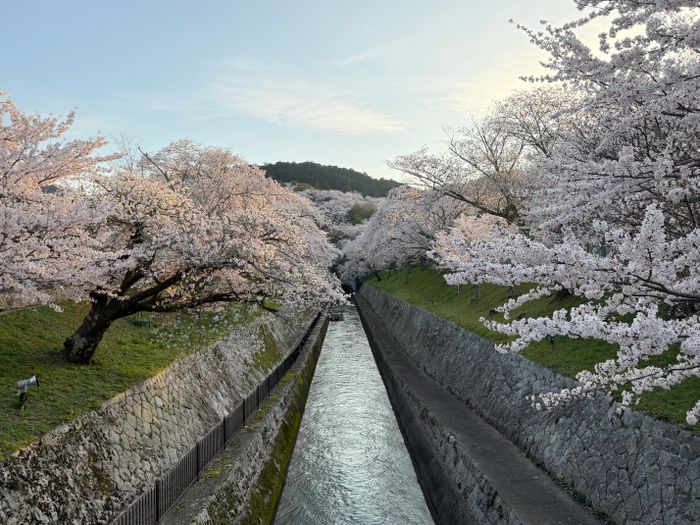
- For cherry blossom, late March to mid-April, about a week per location, which is why our spring itinerary of Japan plans for the season rather than a date. Osaka Castle's park is one of the country's best spots for it and gets correspondingly busy.
- For autumn colour, the second half of November in Kyoto and Tokyo, earlier as you go north or higher. This is the connoisseur's season: as spectacular as blossom, with a longer window, lower prices and fewer people.
- For Shikisai-no-Oka, July to October, and Hokkaido is at its best in summer generally while the rest of the country is hot and humid.
- For Takayama, winter. Snow on the Edo rooftops is the version of that town people remember.
- Avoid three dates entirely. Golden Week (29 April to 5 May), the New Year week when much of the country closes from around 29 December, and Obon in mid-August. All three are domestic travel peaks when trains, hotels and flights sell out months ahead.
One more piece of timing, from our own data: October is the single busiest month travellers plan to start a Japan trip, ahead of April. Everyone talks about cherry blossom; a slightly larger share of travellers quietly plan around the leaves.
How to fit them into one trip
Three shapes, depending on how long you have. All three are routes travellers actually plan, not theoretical ones.
One week. Osaka (2 nights) to Kyoto (2 nights) to Mount Fuji (1 night) to Tokyo (2 nights). That gets you Osaka Castle, Fushimi Inari, Kinkaku-ji, Fuji and the Tokyo landmarks, with Nara as a day trip from either Kyoto or Osaka if you swap a city afternoon for it. Hiroshima does not fit; do not try.
Two weeks, the first-timer classic. Tokyo (4 nights) to Hakone (1) to Kyoto (3) to Nara (1) to Osaka (2) to Himeji (1) to Hiroshima (1) to Miyajima (1). This is the route that covers eight of the ten attractions on this list, and October or November is the best time to run it. Our full two-week Japan itinerary works through the spring version day by day.
Two weeks with the Alps instead. Tokyo (4 nights) to Nagano (1) to Kamikochi (2) to Takayama (1) to Shirakawa-go (1) to Kanazawa (1) to Kyoto (3) to Osaka (1). May is the month for it, because the alpine trails need to be snow-free. You trade Hiroshima for Takayama and the mountains, which is a fair swap if it is not your first trip.
A word on pace, from what we see travellers actually plan. A Japan trip is typically 17 days and carries around nine stops, which works out at a new place every 1.8 days. Nearly a third of all stops are a single night. Japan gets planned as a moving trip in a way that almost no other country does, and the rail network is why. That is fine, and it is also the thing to watch: two nights somewhere is one full day of attractions, not two.
Planning your Japan route: practical tips
Rail pass. A Japan Rail Pass covers the shinkansen and most limited express trains. It costs €310 (€270 (¥50,000)) for seven days, €500 (€430 (¥80,000)) for 14 and €625 (€540 (¥100,000)) for 21 in ordinary class, and children aged 6 to 11 pay half. Two things changed in 2023 and both matter: the price rose by 60 to 70%, which turned the pass from an automatic buy into a calculation, and you can no longer buy it inside Japan, so order the voucher before you fly. Regional passes (JR West Kansai, Kansai-Hiroshima, Hokuriku Arch, JR East) frequently beat the national one, and unlike it they let you ride the fastest Nozomi and Mizuho services. Run the numbers on your own route rather than taking anyone's word for it, ours included.
What the pass does not cover, which is the part that catches people out on exactly this list of attractions: the Kintetsu line to Nara, the Fujikyu line on the last leg to Kawaguchiko, the Odakyu Romancecar to Hakone, the Tobu line to Nikko, the Nohi buses from Takayama and the Hiroden tram in Hiroshima. Budget for those separately.
IC cards. Get a Suica, Pasmo or Icoca at the airport on arrival. Any of them works nationwide regardless of which city you bought it in, and they pay at convenience stores and vending machines too. On an iPhone you can load one straight into Apple Wallet and skip the physical card shortage entirely.
Book early. teamLab, the Ghibli Museum, popular sushi counters, the Shirakawa-go bus and some onsen all need reserving weeks or months ahead. Our own travellers plan Japan further in advance than any other country we measure, a typical 107 days before departure, with almost a third of trips created six months or more ahead. There is a reason for that.
Cash. Japan is genuinely cash-heavy despite its reputation. Small restaurants, temples and rural buses take nothing else. Convenience store ATMs at 7-Eleven, Lawson and FamilyMart accept foreign cards reliably where bank machines often refuse them.
Luggage. Forwarding a case between hotels costs €12-19 and it usually arrives the next day. On a trip with this many one-night stops, it is the single best thing you can do for yourself. Station coin lockers run €2-6 (€1.62 (¥300)-900) by size, charged per calendar day.
Reading more. Our round-up of the best Japan travel blogs is worth bookmarking before you go, and the 20 things to know about Japan guide covers the etiquette this article does not. If you want the destinations rather than the landmarks, start with our 10 best places to visit in Japan. And if you are here for the photographs, the 20 best photo spots in Japan has the exact viewpoints.
Frequently asked questions about Japan
The ten in this guide are Tokyo Skytree, Fushimi Inari Shrine, Mount Fuji, the Hiroshima Peace Memorial Park, Osaka Castle, Nara Park, Kinkaku-ji, the Shikisai-no-Oka flower fields, Odaiba and Takayama's old town. Add Shibuya Crossing, Meiji Jingu, Senso-ji and the Imperial Palace East Garden if you are spending real time in Tokyo, since all four are free.
Two weeks is the workable minimum for the classic Tokyo, Kyoto, Nara, Osaka and Hiroshima run, and three weeks is the consensus ideal. One week means picking either Tokyo with Hakone or Kyoto with Osaka, not both pairs.
More than you would expect. Fushimi Inari, Nara Park, the Hiroshima Peace Memorial Park, Meiji Jingu's grounds, Senso-ji, the Imperial Palace East Garden, Takayama's old town, Osaka Castle's park and the Arashiyama bamboo grove all charge nothing. What you pay for is usually the building at the centre, not the site around it.
For some, yes, and the consequences of not doing it are absolute. Ghibli Museum tickets go on sale on the 10th of the month for the following month and sell out within minutes, with no box office. Both teamLab sites sell out daily. Climbing Mount Fuji needs a slot booking and there is a daily cap.
No, and this is the part that gets misjudged. Most temples and gardens are €2.50 to €6 (¥400 to ¥1,000) and observation decks €13 to €21 (¥2,000 to ¥3,400), and a long list of the headline sights is free. What costs money in Japan is moving between them.
Save these to your trip in Stippl and they are on your map before you land.
Working out the order is the hard part of a Japan trip, not the choosing. Drop the attractions you want into a Stippl trip and it builds the route around them, with the train times and the day-by-day already in place. Free forever.