
Plan Italy in Stippl
Day-by-day planning, stays and budget in one app, with every place from this guide already on the map.
Download the appThe short answer
The best free things to do in Florence are walking into the Duomo, crossing Ponte Vecchio, standing in Piazza della Signoria and the Loggia dei Lanzi, watching the sunset from Piazzale Michelangelo, and hearing the monks sing at San Miniato al Monte. All five cost nothing, and all five sit within a forty minute walk of each other.
What still costs money: climbing Brunelleschi's dome needs the top-tier Brunelleschi Pass, the bell tower and baptistery come on the cheaper Giotto Pass, the Uffizi is €25 from January 2026 (€16 after 16:00), and the Accademia charges separately to see the original David. The cathedral floor, the squares, the bridges and the viewpoints are all free every day of the year.
Most travellers who plan Florence with Stippl give the city two nights, the sharpest peak of any Italian destination we measure. On a stay that short, knowing which sights are free before you arrive is what decides how much of the city you actually see.
The 20 best free things to do in Florence
1. Marvel at Florence Cathedral (Duomo)
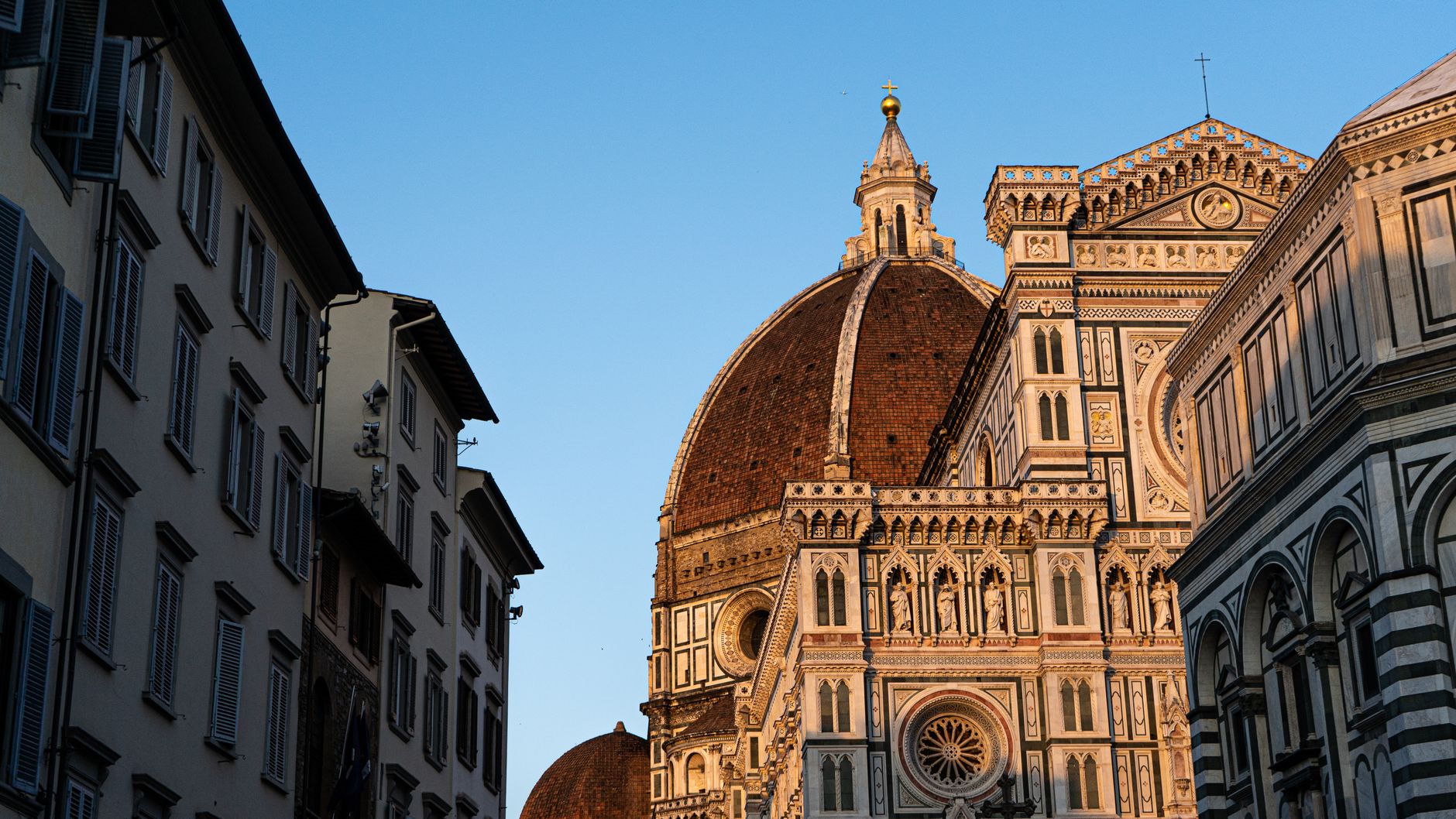
The Duomo, properly Santa Maria del Fiore, is unmissable: a striking green, white and pink marble facade under Brunelleschi's dome, still the largest masonry dome ever built. Climbing the dome or the bell tower needs a paid ticket, but stepping inside the cathedral itself is completely free, and the interior frescoes and scale are worth the visit on their own.
Arrive early in the morning or late afternoon to skip the longest queues, and pair the visit with a walk round Piazza del Duomo to take in the Baptistery and Giotto's Campanile too.
2. Stroll across Ponte Vecchio
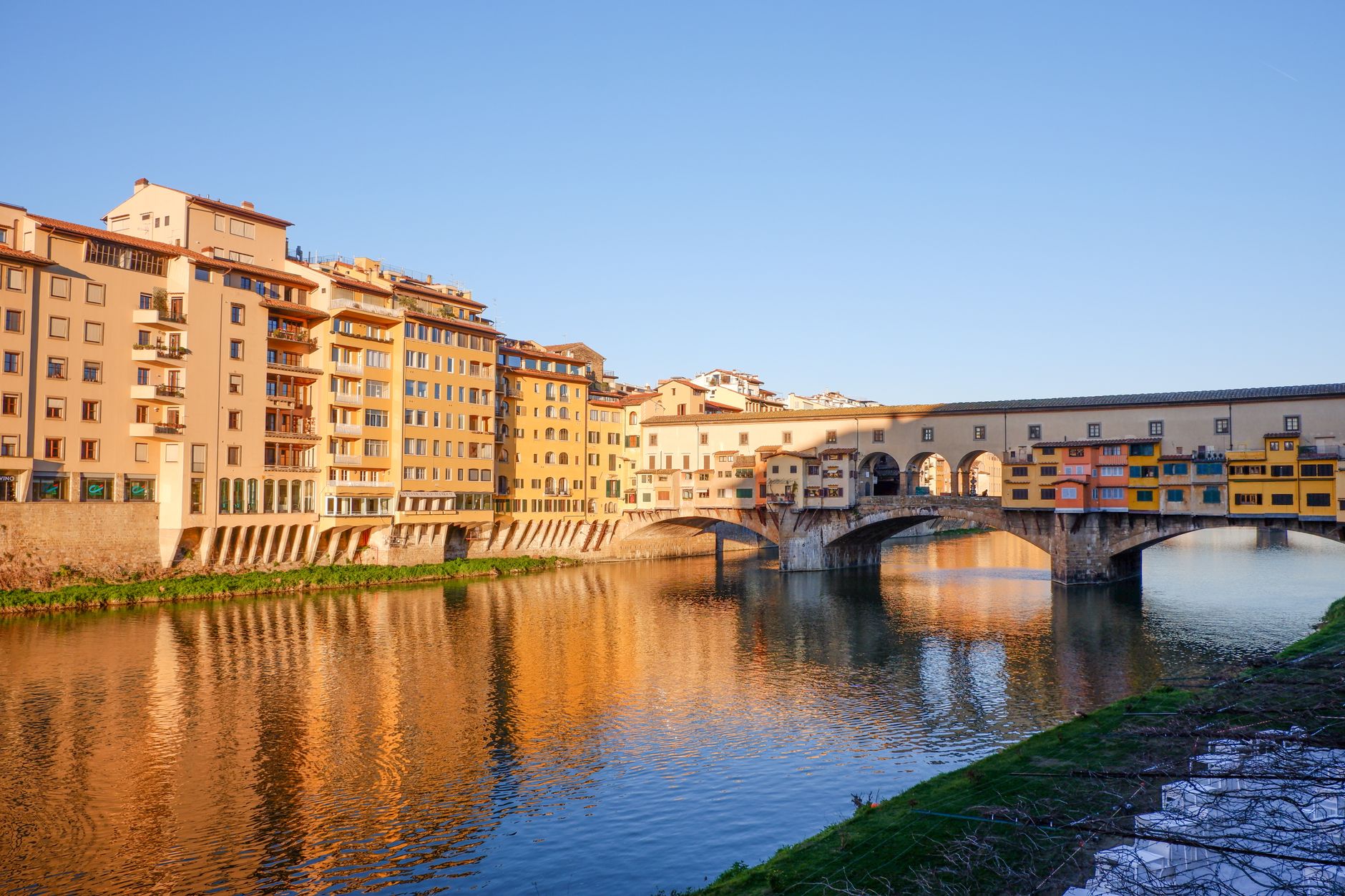
The Ponte Vecchio, Florence's "old bridge", spans the Arno and is lined with jewellery and art shops. It's free to walk, and the river views from the bridge are some of the best in the city, especially at golden hour.
Go around sunset for the warm light and the classic photo. Just note that Florence's new dehors rules, in force since February 2026, ban outdoor dining structures outright on sixty streets inside the UNESCO core, Ponte Vecchio among them, so plan a sit-down drink somewhere off the bridge rather than assuming you'll find a table on it.
3. Explore Piazza della Signoria
Piazza della Signoria works as Florence's open-air museum: a replica of Michelangelo's David, the Fountain of Neptune, and the Palazzo Vecchio town hall, all free to look at from the square. Walk into the Loggia dei Lanzi too, a covered gallery of statues that most first-timers walk straight past.
Come in the early evening when the square is lively but not overwhelming, and give yourself twenty minutes just to sit with a gelato and watch it.
4. Admire the Gates of Paradise
On the east side of the Baptistery of St John stand the Gates of Paradise, gilded bronze doors by Lorenzo Ghiberti depicting biblical scenes in astonishing detail. They're outdoors, in the open, and free to study for as long as you like.
Combine this with the Piazza del Duomo walk above rather than a separate trip, and take your time on the panels closest to eye level, where the craftsmanship shows best.
5. Wander through the Boboli Gardens
Behind the grand Pitti Palace, the Boboli Gardens offer fountains, sculptures and hidden grottoes across a genuinely large green space. The gardens open free on the first Sunday of the month under Italy's national Domenica al Museo scheme, which is still running in 2026.
Confirm the date on the Uffizi Galleries' own ticket page before planning around it, and wear comfortable shoes either way: the gardens include real uphill walking, with the views over Florence to show for it.
6. Visit San Miniato al Monte
Further up the same hill as Piazzale Michelangelo sits San Miniato al Monte, one of Florence's most beautiful churches: Romanesque architecture, intricate mosaics and a terrace view that rivals the more famous one below it, all free to enter. In the evening, the resident monks sing Gregorian chant, and the church holds almost none of the crowd that gathers downhill.
Time your visit for early evening if you want the chanting, and treat the extra ten-minute climb from Piazzale Michelangelo as the whole point rather than an inconvenience.
7. Walk along the Arno River
Strolling the Arno gives you Florence's bridges and waterfront buildings without a ticket anywhere. The water is calm enough to sit and watch for a while, which makes it a good way to unwind after a day of museums and queues.
Start at Ponte Vecchio and walk toward Ponte Santa Trinita for the best combination of views and the fewest crowds.
8. Discover Santo Spirito Square
Santo Spirito sits in the Oltrarno, across the river from the main sights, and it's where a lot of actual Florentine life happens: cafes, restaurants, and the Basilica of Santo Spirito, designed by Brunelleschi, at its centre. The square itself costs nothing to enjoy.
Go on a Sunday morning for the antique and artisan market that fills the square, which is a far more local scene than anything in the Duomo streets.
9. Enjoy free museums on special days
Florence's biggest state museums, including the Uffizi Gallery and the Accademia (home to Michelangelo's original David), open free on the first Sunday of the month under Italy's national Domenica al Museo scheme. Given the Uffizi now charges €25 from January 2026 (€16 if you enter after 4 pm, plus a €4 booking fee any time), a free Sunday is a bigger saving than it used to be.
Check the museum's own page for the Sunday you're there and turn up early, because free days get crowded fast and the culture ministry confirms them a month at a time rather than for the whole year.
10. Explore the Oltrarno district
"Oltrarno" simply means "across the Arno", and it's the neighbourhood where the artisans and the residents still are: gilders, leatherworkers and restorers trading out of workshops on quiet streets behind Santo Spirito. None of it costs anything to walk through, and it's a completely different pace from the Duomo side of the river.
Keep an eye on open workshop doors as you walk. Watching someone gild a frame or cut leather by hand is free, and it's the most Florentine thing you'll see all day.
11. Visit Piazzale Michelangelo
Piazzale Michelangelo gives you the view every photograph of Florence is taken from: the Duomo, Palazzo Vecchio and Ponte Vecchio all framed together across the river, free, about twenty-five minutes uphill from Ponte Vecchio on foot.
Go for sunset, but arrive at least half an hour early. The terrace fills up fast in high season, and the best spot along the balustrade goes to whoever gets there first.

12. Explore Florence's street art
Florence's modern, less Renaissance side shows up in its street art: local and international pieces on walls and street signs around the centre and out toward Sant'Ambrogio. Free to find, and a genuine contrast to a city otherwise built entirely of stone and fresco.
A free walking tour is the easiest way to be shown pieces you'd otherwise miss; Sant'Ambrogio, east of the centre, is the neighbourhood to wander for the most of it.
13. Wander through Piazza Santa Croce
Piazza Santa Croce is free to explore even though the Basilica of Santa Croce itself, the resting place of Michelangelo, Galileo and Machiavelli, charges an entry fee. Every June, the square also hosts Calcio Storico, a violent sixteenth-century football tournament between the city's four historic quarters, with finals on 24 June.
Visit in the evening when street performers and locals take over the open space, and time a June trip around the tournament if the spectacle interests you more than the museums do.

14. Visit the San Lorenzo leather market
The San Lorenzo Leather Market is a proper sensory overload: stalls of leather goods, souvenirs and handmade items, free to browse whether or not you buy anything.
If you do want something, most vendors expect gentle bargaining, so don't take the first price as final.
15. Stop by the Mercato Centrale
The Mercato Centrale's ground floor is still a working market of fresh produce, meat and cheese, while the upper floor is a food hall. Walking through either level costs nothing, and it's one of the better ways to see Florence's food culture without a restaurant bill.
Go in the morning for the liveliest stalls and the smell of bread straight from the oven.
Discover food spots in Stippl
Find restaurants and markets on the map, save them to your itinerary, works offline too.

16. Admire Palazzo Pitti's facade
The Pitti Palace charges for its interiors, but the grand Renaissance facade and the piazza in front of it are free to admire, and the scale alone tells you plenty about the Medici family's ambitions.
Combine it with a walk through the surrounding Oltrarno streets for a quieter, less touristy hour than anything on the Duomo side.
17. Visit Florence's libraries
The Oblate Library, tucked away from the main streets, is a quiet retreat with a rooftop terrace looking straight at the Duomo, free to sit on with a coffee from the library's own cafe.
It's one of the least crowded views in the centre, so it's worth the detour on a day when everywhere else feels full.
18. Explore the Bardini Garden
The Bardini Garden is Florence's quieter answer to the Boboli, with panoramic views and a wisteria-covered pergola that's genuinely spectacular in spring. One caveat, and it matters on a list like this: the Bardini is run by a private foundation rather than the state, so it charges €10 and sits outside the first-Sunday scheme. Under-18s from the EU get in free, and a Firenze Card covers it.
Late afternoon gives the softest light and the fewest other visitors, wisteria season or not.
19. Stroll through Piazza della Repubblica
Piazza della Repubblica is one of Florence's grandest squares, ringed by cafes and home to a historic carousel. Live music or street performance turns up here often enough to be worth checking, and none of it costs anything to watch from the square itself.
Go in the evening, when the square is lit up and busiest with locals rather than day-trippers.
20. Watch the sunset from Fiesole
Fiesole is a hilltop town just outside Florence, a short trip from the centre, with views over the Tuscan countryside and the city below that are worth the detour on their own. It's a genuinely different destination in its own right, not just a Florence viewpoint, so treat it as a half-day escape rather than a quick stop; the Roman theatre and archaeological area are what fill it.
Bring something to eat and watch the sunset from the hilltop rather than rushing back down before dark.
Other ways to keep your Florence trip cheap
Free sights cover a lot of ground, but a few other habits make the rest of the trip cheaper too.
Travel during the off-season
The cheapest months to visit Florence are November to February, excluding Christmas and New Year: January is the coldest and cheapest month of the year, museums are genuinely quiet, and accommodation prices drop with the temperature. If you'd rather have better weather without paying peak prices, April to May and September to October are Florence's best months overall: warm, long daylight, and just short of the July to August crowds. November is also the wettest month, so pack for rain if you go then.
Budget
€60–95
A hostel bed in San Marco, schiacciata and lampredotto, one ticketed museum
Mid-range
€150–240
A three-star or B&B in the centre, sit-down lunches, the Uffizi and the dome
High-end
€400–900+
A hotel on the Arno or in a restored palazzo, booked restaurants, private guides
Stay in budget-friendly neighbourhoods
A few neighbourhoods outside the most expensive streets give you a more authentic feel for less money:
- Oltrarno (including San Frediano): Across the Arno, quieter than the centre, full of artisan workshops and affordable trattorias, with the Boboli Gardens close by.
- San Marco: North of the centre near the Accademia, consistently the best value inside the city walls: quiet, central enough to walk everywhere, and cheaper than the Duomo streets.
- Santa Croce: Close to the centre but more budget-friendly for both food and accommodation, with a livelier evening scene than the Duomo side.
Search guesthouses, hostels or apartments in these areas for the best rates, or book your accommodation directly through Stippl.
Eat at budget-friendly restaurants
Florence's food scene doesn't require a big budget to enjoy properly:
- Trattoria Mario (€15 to €20): a cosy trattoria near Mercato Centrale serving hearty Florentine dishes like ribollita and bistecca alla fiorentina.
- All'Antico Vinaio (€5 to €7): famous for its enormous panini; expect a queue, but it moves fast and the sandwiches are worth the wait.
- Pizzeria Toto (€8 to €12): wood-fired pizzas and traditional pasta in Santa Croce.
- Mercato Centrale (€10 to €15 a meal): the food hall floor has stalls covering most Tuscan specialities in one place.
- Gustapizza (€8 to €10): a casual, budget-friendly wood-fired pizza spot in the Oltrarno.
Look out for a "menu del giorno" (daily set menu) at trattorias and osterias: a starter, main and drink for around €10 to €15 is common.
Shop smart for souvenirs
Skip the high-end boutiques and try the local markets instead:
- San Lorenzo Market: leather goods, scarves and accessories.
- Mercato delle Pulci (flea market): vintage items and antiques.
- Mercato Sant'Ambrogio: fresh produce, cheeses and local wine to take home a taste of Tuscany.
Bargaining is normal in the markets, so a polite negotiation rarely goes down badly.
Opt for aperitivo instead of dinner
Aperitivo, a drink that comes with free or inexpensive snacks, is a properly Florentine way to eat well on a small budget. Locale Firenze (€8 to €12, food included) and Volume in Piazza Santo Spirito (€6 to €8) are two reliable spots, and aperitivo generally runs from 6 pm to 9 pm, which makes it a genuine alternative to a full dinner rather than just a pre-dinner drink.
A Renaissance adventure without the price tag
Florence gives you Renaissance art, centuries of history and some of Italy's best views, and a genuinely large share of it costs nothing at all. From the free cathedral to a sunset that needs nothing but a decent pair of walking shoes, these twenty things prove you don't need a big budget to experience the real city.
Add the free sights and the budget picks above to a Stippl trip and the app builds the walking order and timing around your stay, so you're not backtracking across the same bridge twice. Free forever.
Frequently asked questions about Italy
Plenty. The Duomo cathedral, Ponte Vecchio, Piazza della Signoria, the Gates of Paradise, Piazzale Michelangelo and San Miniato al Monte are all free to enter or walk through, and that's before markets, squares and neighbourhoods like the Oltrarno, which cost nothing just to explore.
Yes, on the right day. Florence's state museums, the Uffizi and the Accademia included, open free on the first Sunday of the month under the national Domenica al Museo scheme. Check the museum's own page for that Sunday and arrive early, because free days get busy fast.
The cathedral itself, yes, completely, and the Opera del Duomo says so on its own ticket page. What isn't free is the dome, the bell tower, the baptistery or the museum. Those sit behind one of three passes, and only the dome climb needs the top-tier Brunelleschi Pass.
Piazzale Michelangelo, about twenty-five minutes uphill from Ponte Vecchio, gives the classic view. For the same skyline with far fewer people, keep climbing another ten minutes to San Miniato al Monte.
Most of this list fits into two days of unhurried walking, which matches the typical Florence stay for travellers who plan their trip with Stippl. Spread the viewpoints across an evening each, use the daytime for the squares, markets and the Duomo, and give the rest to the northern cities within easy reach.