
Here is the shape of it: 14 days and 14 nights, six places you actually sleep and four you visit on day trips, driven as a loop from Bari airport down the Adriatic to the Salento, across to the Ionian, back up through the trulli country and finally north to the Gargano. It is a road trip, not a beach holiday with excursions attached. Puglia runs 400 km from the northern promontory to the tip of the heel, and the interest is spread along the whole length of it rather than gathered in one place, which is exactly why nobody bases themselves in one town for a fortnight.
Plan Italy in Stippl
Day-by-day planning, stays and budget in one app, with every place from this guide already on the map.
Download the appYour 14-day Puglia itinerary at a glance
| Duration | 14 days, 14 nights |
| Route | Polignano a Mare → Lecce → Taranto → Cisternino → Bari → Vieste |
| Day trips | Monopoli, Otranto, Matera, Locorotondo and Alberobello |
| Transport | Hire car, picked up at Bari airport. There is no version of this route that works without one |
| Budget per day | €70-125 budget · €150-345 mid-range, per person, before flights |
| Best time | May, June or September. September is the pick: warm sea, thinning crowds, harvest under way |
| Book ahead | Masserie and trulli stays in the Valle d'Itria, and anything at all in August |
| Stippl tip | Travellers who plan Puglia by naming its towns rather than the region average 4.62 stops and 5.68 nights. This route is a longer version of exactly that shape |
Budget
€70–125
hostel dorm or Mestre-style base, pizza al taglio and market meals, regional trains, free-Sunday museums
Mid-range
€150–345
A 3-star or agriturismo double, trattoria dinners, high-speed trains, a paid sight per day
High-end
€325+
boutique or coastal hotels, guided tours, boat days, tasting menus
How many days do you need in Puglia?
Two weeks is the version of this trip where nothing is rushed and the Gargano makes the cut. If you have less time, the honest answer is that a week gets you the Valle d'Itria and the Salento, and ten days adds the coast at both ends. What a week does not get you is the Gargano, which sits about two and a half hours north of Bari and is effectively a trip of its own.
Here is how to cut this exact route down without redesigning it:
- One week: Polignano a Mare (2 nights), Cisternino (2 nights) with the Alberobello and Locorotondo day trip, then Lecce (3 nights) with Otranto. Fly in and out of Bari.
- Ten days: the week above, plus Matera as an overnight instead of a day trip and two nights in Bari at the end.
- Fourteen days: the full route below, with Taranto on the Ionian side and three nights in Vieste.
The reason two weeks works so well here is that Puglia rewards distance covered rather than time in one spot. Our own trip data says the same thing in a roundabout way: travellers who plan Puglia by naming its towns build trips averaging 4.62 stops and 5.68 nights, while travellers who just write "Puglia" as a single stop average 1.36 stops and 3.97 nights. The people who name the towns are the people doing the drive.
Polignano a Mare, and a stop in Monopoli
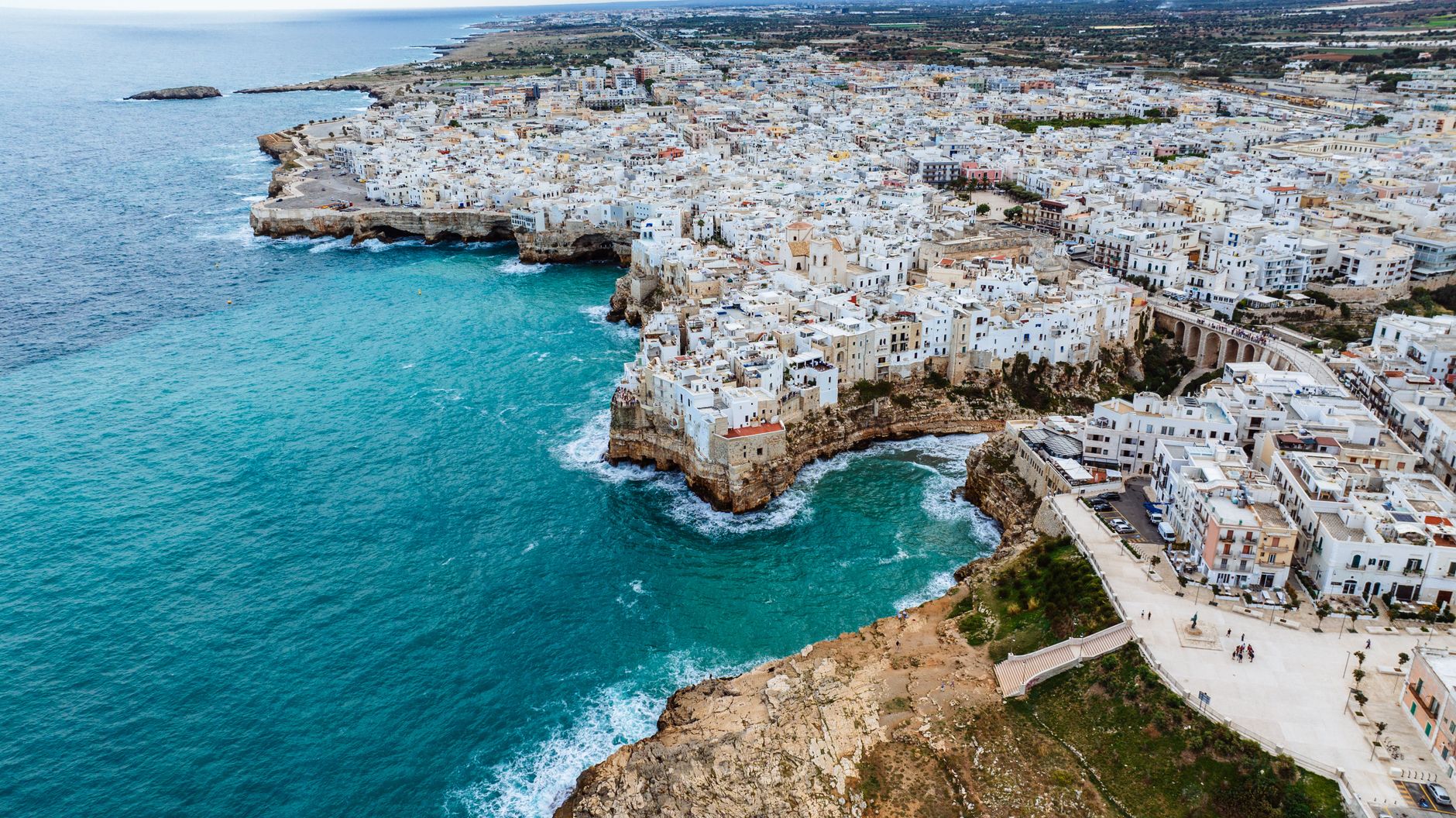
Land at Bari, collect the car, and drive straight past Bari to the coast. It takes about 30 minutes and it is the gentlest possible start: a town built out over the sea on a limestone cliff, with a beach at the bottom of a staircase in the middle of the old town.
What to do. Lama Monachile Beach is the one in every photograph, reached down the steps from the bridge in the centre. Walk the historic centre in the evening when the day trippers have gone. Take a boat tour out to the sea caves, including the famous Grotta Palazzese. And find the Domenico Modugno statue on the seafront, arms out over the Adriatic, for the panoramic view along the cliffs.
Where to eat. Grotta Palazzese is the cave restaurant cut into the cliff face, and it is a set piece rather than a meal: average price €120 per person, and you book it weeks out. Pescaria is the other end of the scale, gourmet seafood sandwiches eaten standing up, around €25 per person.
Where to stay. Stay inside or right beside the old town so you can walk to dinner, because parking in the historic centre is genuinely difficult and the streets are narrow. Hotel Covo dei Saraceni has the cliffside position, sea-view rooms and a rooftop terrace, around €180 per night. If that is above budget, pick a hotel with its own parking anywhere in the newer part of town and walk in; the old town is small.
The Monopoli stop. On day two, drive up the coast to Monopoli for a few hours. It is a working port with a medieval and baroque old town wrapped around it, and it is quieter than Polignano because fewer people stop. Walk the harbour, look inside the Basilica Cattedrale Maria Santissima della Madia away from the middle of the day, browse the market for local produce, and swim at Cala Porta Vecchia if the weather is with you. Lunch is Osteria Perricci for traditional Apulian seafood (around €30 per person) or La Locanda Sul Porto for fresh fish and pasta (around €35). Take some local olive oil home from here.
Souvenir from Polignano: handmade ceramics.
Lecce, and a day in Otranto
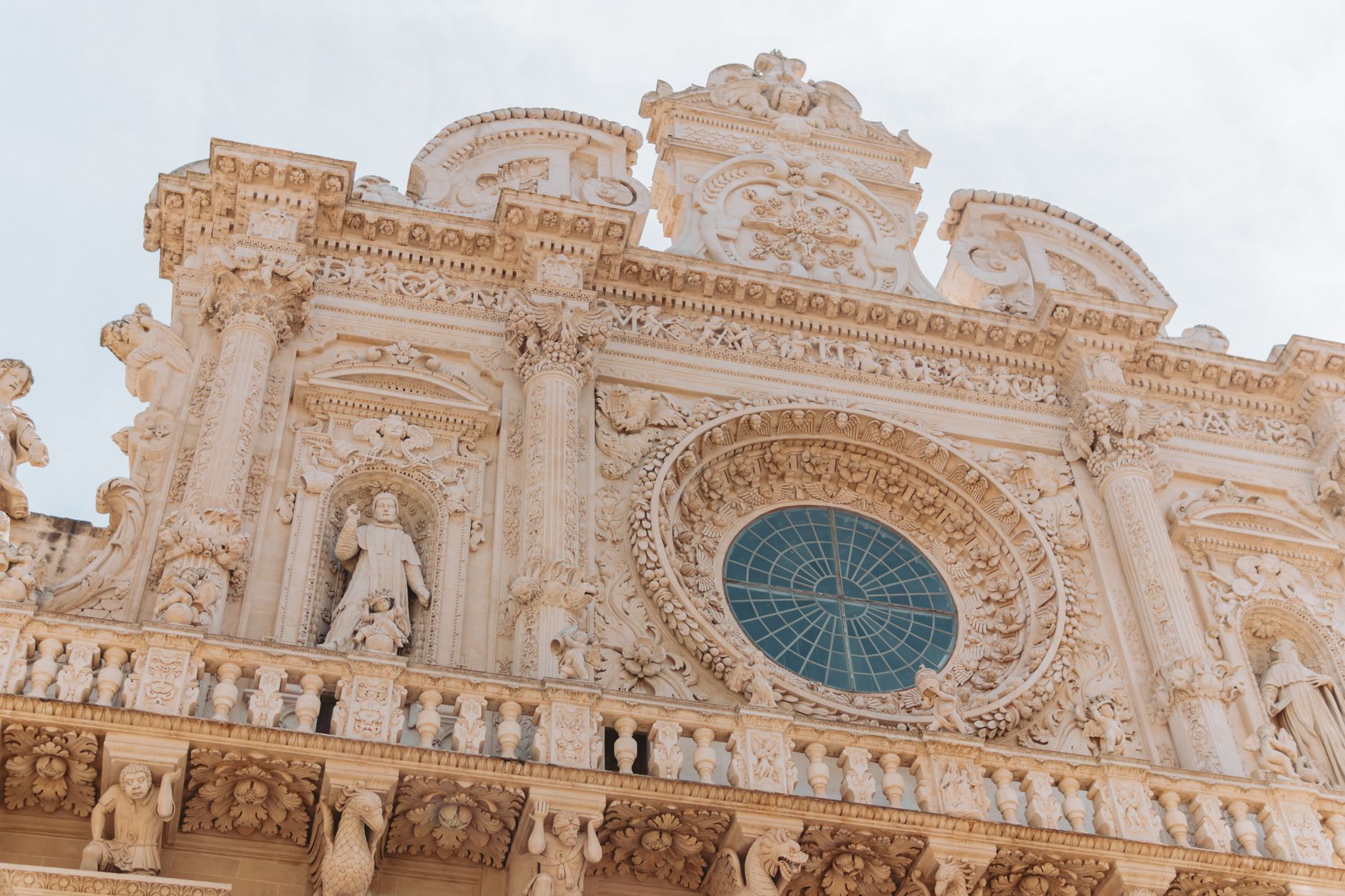
Head south into the Salento. Lecce is often called the Florence of the South, and the reason is the stone: pietra leccese is a local limestone soft enough to carve like wood, which hardens once it is exposed to the air. That single fact explains every facade in the city.
What to do. The Basilica di Santa Croce is the one to see first, and early, before the light gets flat and the square fills. The Roman amphitheatre sits half-excavated in the middle of town, a reminder that the baroque is the newest layer here, not the oldest. Wander the historic centre and Piazza del Duomo on foot, which is the only way the city makes sense. Museo Faggiano is the odd one out and worth an hour: a family started renovating a bathroom, hit 2,000 years of history underneath the house, and turned the whole building into a museum.
Where to eat. Trattoria Le Zie for genuinely local Lecce cooking, around €30 per person. Le Quattro Spezierie for something more modern, around €50. Ask for rustico leccese at any bakery: puff pastry, mozzarella, tomato and béchamel, and the city's own snack.
Where to stay. Stay inside the walls. Lecce's historic centre is ZTL-restricted like every Italian old town, so you want a hotel that either has a permit for you or is close enough that you park outside and walk. Palazzo Rollo is central, in a historic building with the decor to match, around €140 per night.
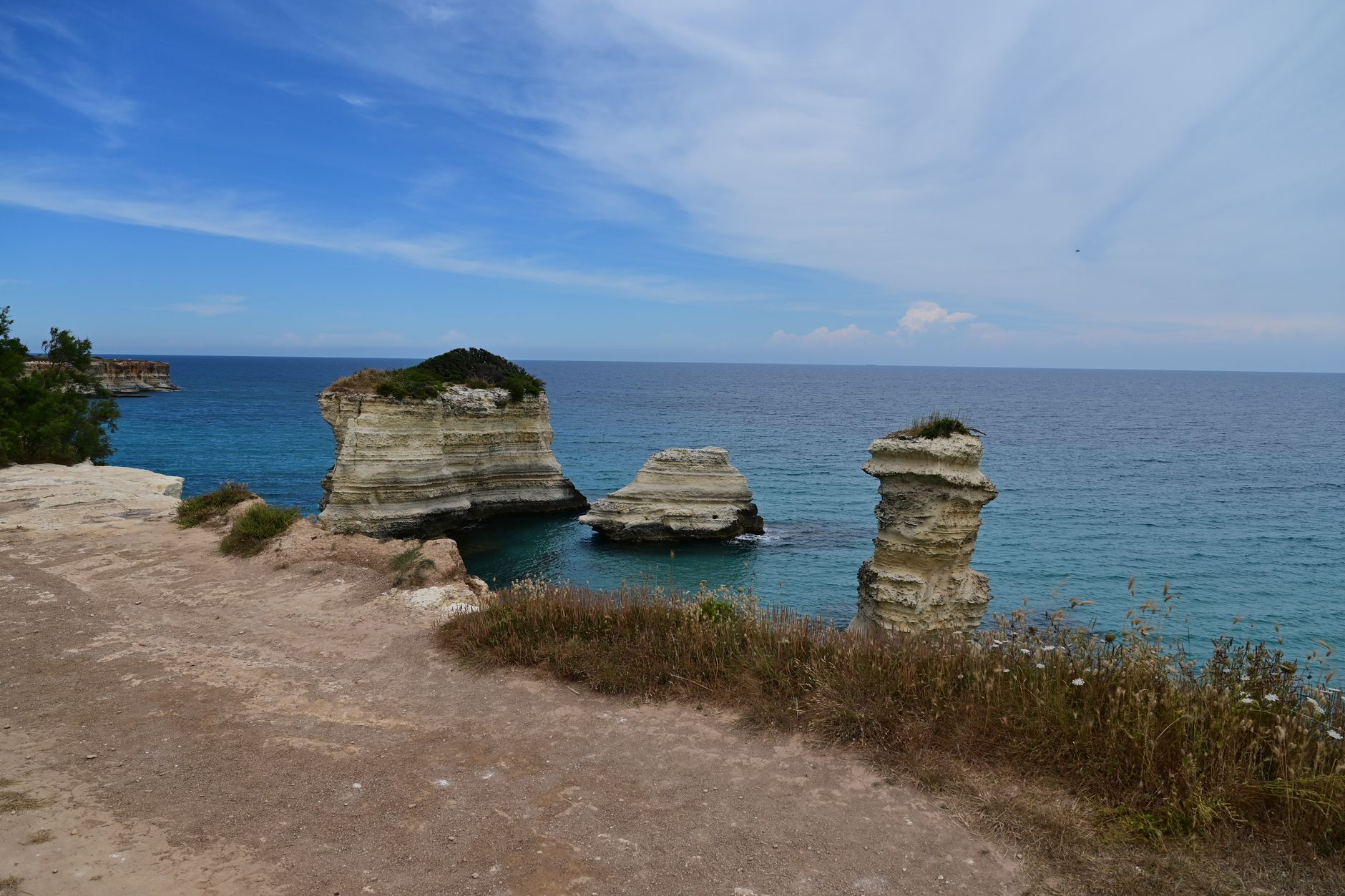
Bring a swimsuit. This is the point on the route where the coast becomes properly swimmable, and Baia dei Turchi is a few minutes north of Otranto: pale sand, Mediterranean scrub behind it, and clear shallow water. It is one of the fifteen we scored in our guide to the best beaches in Puglia, and if you would rather build the trip around swimming than sightseeing, that guide is where to pick your stops. A sunbed and umbrella at a beach club runs about €15-30 a day in season; much of the good coast here is concessioned, so budget for it.
Where to eat in Otranto. L'Altro Baffo for inventive seafood, around €40 per person, or La Pignata for local cooking in a smaller room, around €30. Coral jewellery is the souvenir here.
One thing to know about this drive. The olive groves you pass through south of Lecce are not all healthy. Xylella fastidiosa has killed on the order of 21 million olive trees across roughly 183,000 hectares of the southern region since 2013, and the standing dead trees are part of the landscape now. Recent research disputes how much of the total decline the bacterium alone caused, but the change is visible from the road either way.
Taranto, and a day in Matera
Cross the heel to the Ionian side. Taranto is the least visited stop on this route and the one that surprises people: a working port city with a Greek past, wrapped around two seas, and almost no tour groups.
What to do. The National Archaeological Museum is the reason to come. Taranto was one of the richest cities of Magna Graecia and the gold jewellery in that collection is extraordinary. The Aragonese Castle is best with a guided tour, since it is still a naval property and access is managed. Then walk the Lungomare Vittorio Emanuele III in the evening, which is where the whole city goes.
Where to eat. Al Gatto Rosso for seafood platters, around €45 per person. Ristorante Paranza for traditional Taranto fish cooking, around €35. The local souvenir is unusual: mussel pearls, from the mussel beds in the Mar Piccolo.
Where to stay. Base yourself in the modern city rather than the old island town, which is atmospheric but half-derelict in places. Hotel Akropolis has a rooftop terrace and a central position, around €100 per night, and it is the cheapest overnight on this route.
Day trip: Matera. Matera is not in Puglia. It is in Basilicata, about an hour from Alberobello and 65 km away, and it is on almost every Puglia itinerary regardless, because there is nothing else like it. The Sassi are cave dwellings carved into the ravine, lived in continuously from prehistory until the 1950s, then emptied by law and slowly brought back to life.
Wear proper shoes: the terrain is uneven, steep and entirely made of steps. Give yourself time for the rock churches, many of which still have frescoes, and for Matera Cathedral above the Sassi. Piazza Vittorio Veneto is where the panoramic view is. A guided tour is worth it here more than anywhere else on this route, because without the context the Sassi are just picturesque, and the actual story is much stranger.
Where to eat in Matera. Ristorante Francesca serves local dishes inside a cave, around €50 per person. Osteria Al Casale does traditional Basilicata cooking, around €40. Local pottery is the souvenir.
Cisternino, and a day in the trulli towns
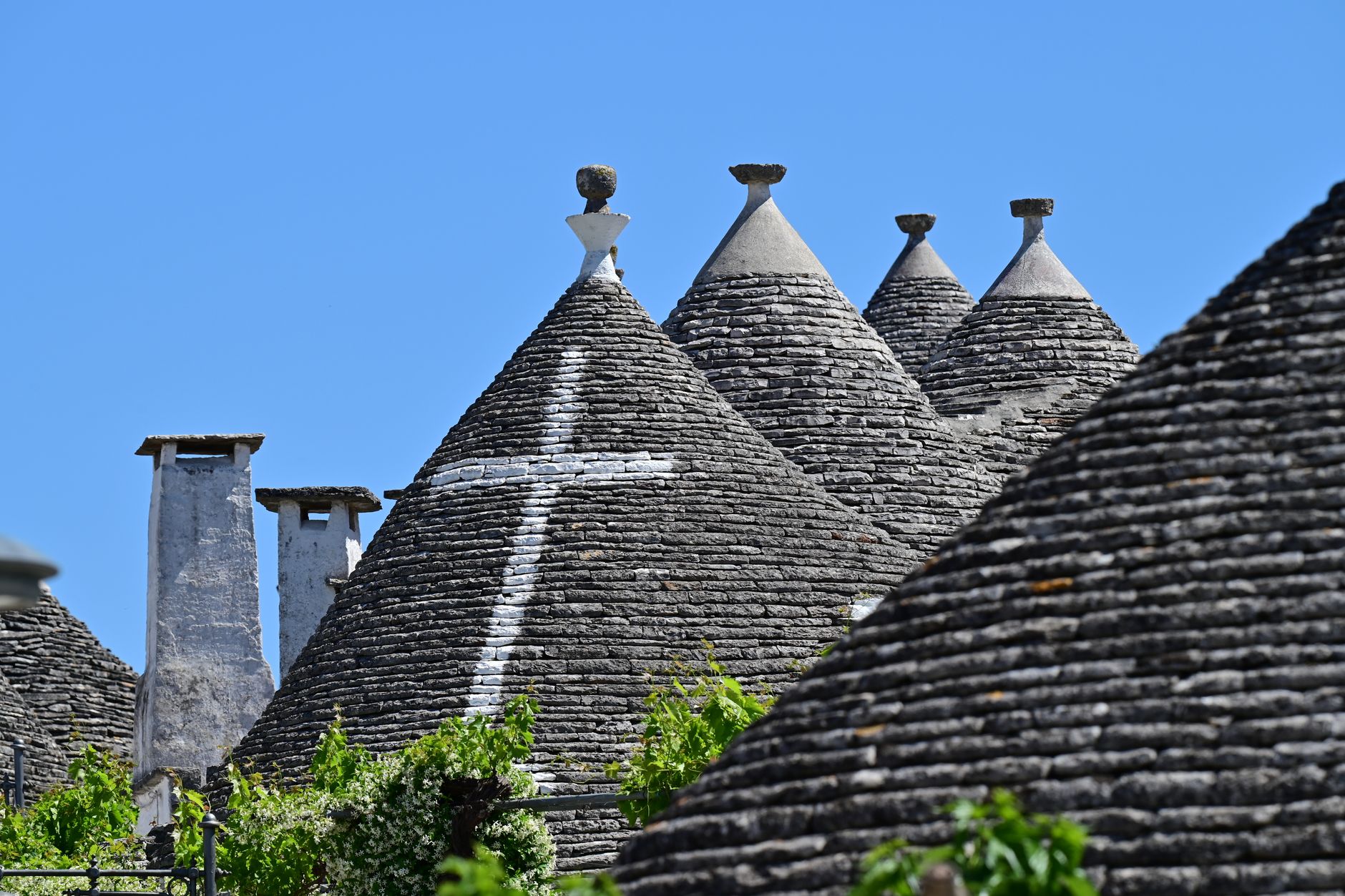
Drive north into the Valle d'Itria, the middle of the three Puglias: white hill towns above olive groves, and the part of the region most people picture when they think of it. Cisternino is a hilltop town of whitewashed houses and narrow lanes, and it is the quiet one.
What to do. Walk the historic centre with no plan at all, which is what it is for. See the Church of San Nicola. Sit in the Villa Comunale for the view out over the countryside. Time your stay to catch the weekly market if you can, which is where the town does its actual shopping. Cisternino is also known for its fornello pronto butchers: you pick the meat at the counter and they grill it for you to eat there, which is a better dinner than most restaurants in the area.
Where to eat. Osteria Sant'Anna for traditional meat dishes, around €35 per person. Il Trullo dei Sapori for local cooking in a trullo, around €30. Take a bottle of the local wine home.
Where to stay. This is the leg to spend money on the room, because the accommodation is the experience. A masseria is a fortified farmhouse, built against raiders and now converted into hotels with olive groves and a pool attached, and it is the region's own form of stay. Masseria Spetterrata has the countryside setting, a pool and farm-to-table dining, around €120 per night. Mid-range masserie generally run €120-250 a night for two in season. Staying in a trullo is the other option, widely available around Alberobello at roughly €90-180 a night, and it is a genuine experience rather than a gimmick.
Day trip: Locorotondo and Alberobello. Locorotondo first, and early. It is built on a circular plan on top of a hill, all whitewashed and full of flowers, and the Church of Saint George anchors the centre. Then Alberobello, which is the UNESCO site: over a thousand trulli, conical dry-stone roofs built without mortar, listed in 1996 with binding restoration rules for the owners. The standing account of why they were built that way is that a removable keystone let an owner collapse a roof quickly to avoid a tax on permanent dwellings.
Go early, before the coach groups and before the heat. Rione Monti is the dense, busy district and Aia Piccola is the quieter, more residential one, so do the second if the first is full. Trullo Sovrano is the only two-storey trullo and now a small museum.
Where to eat. La Taverna del Duca in Locorotondo for traditional Apulian dishes, around €30 per person. Trullo d'Oro in Alberobello for local cooking inside a trullo, around €35.
Worth the detour from here. The Grotte di Castellana are 20 minutes or so from Alberobello: three kilometres of caves ending at the White Grotto, guided access only, at fixed departure times. The full three-kilometre tour is €25 and the shorter one-kilometre route (about 50 minutes) is €22. Castel del Monte is further inland, Frederick II's octagonal castle on the Murgia plateau, octagonal in every element and with no established purpose at all: it has no kitchens, no stables and no defences. Entry is €10 full or €2 reduced, open daily 10:00 to 18:45 from April to September, and free on the first Sunday of the month.
Bari

Most Puglia itineraries drive straight out of Bari airport and never come back. That is a mistake, and it is the single most consistent thing our sources agree on: the people who do stop rate the old town highly.
What to do. Bari Vecchia is a maze and best walked without a map. The Basilica of Saint Nicholas is a major pilgrimage site, for Orthodox as well as Catholic visitors, and it is quietest early. Castello Normanno-Svevo is the Norman-Swabian castle at the edge of the old town. And the Lungomare Nazario Sauro is one of the longest seafront promenades in Italy, made for an evening walk.
The one thing not to miss. Via Arco Basso in the old town is where the pasta women make orecchiette by hand, in the street, on tables outside their front doors, and sell it to you there. Orecchiette is the regional pasta and this is where you watch it being made. Several visitors book a lesson with one of them, which is a better souvenir than anything in a shop.
Where to eat. Al Pescatore for fresh seafood with harbour views, around €40 per person. Osteria delle Travi for traditional Bari cooking, around €25. Order orecchiette con cime di rapa, and eat focaccia barese for breakfast at least once. Raw seafood is a real tradition on both coasts here, so if crudo appears on a menu, that is not an affectation.
Where to stay. Stay in or next to Bari Vecchia, not out by the station. Palazzo Calò is a historic building with modern rooms in a central position, around €130 per night. If you are travelling on a budget, Bari has the widest cheap-hotel choice on this route, which the smaller towns do not. Petty theft around the old town and the station is the one recurring warning in an otherwise very safe region, so the usual city sense applies.
Souvenir: hand-painted pasta.
Vieste and the Gargano
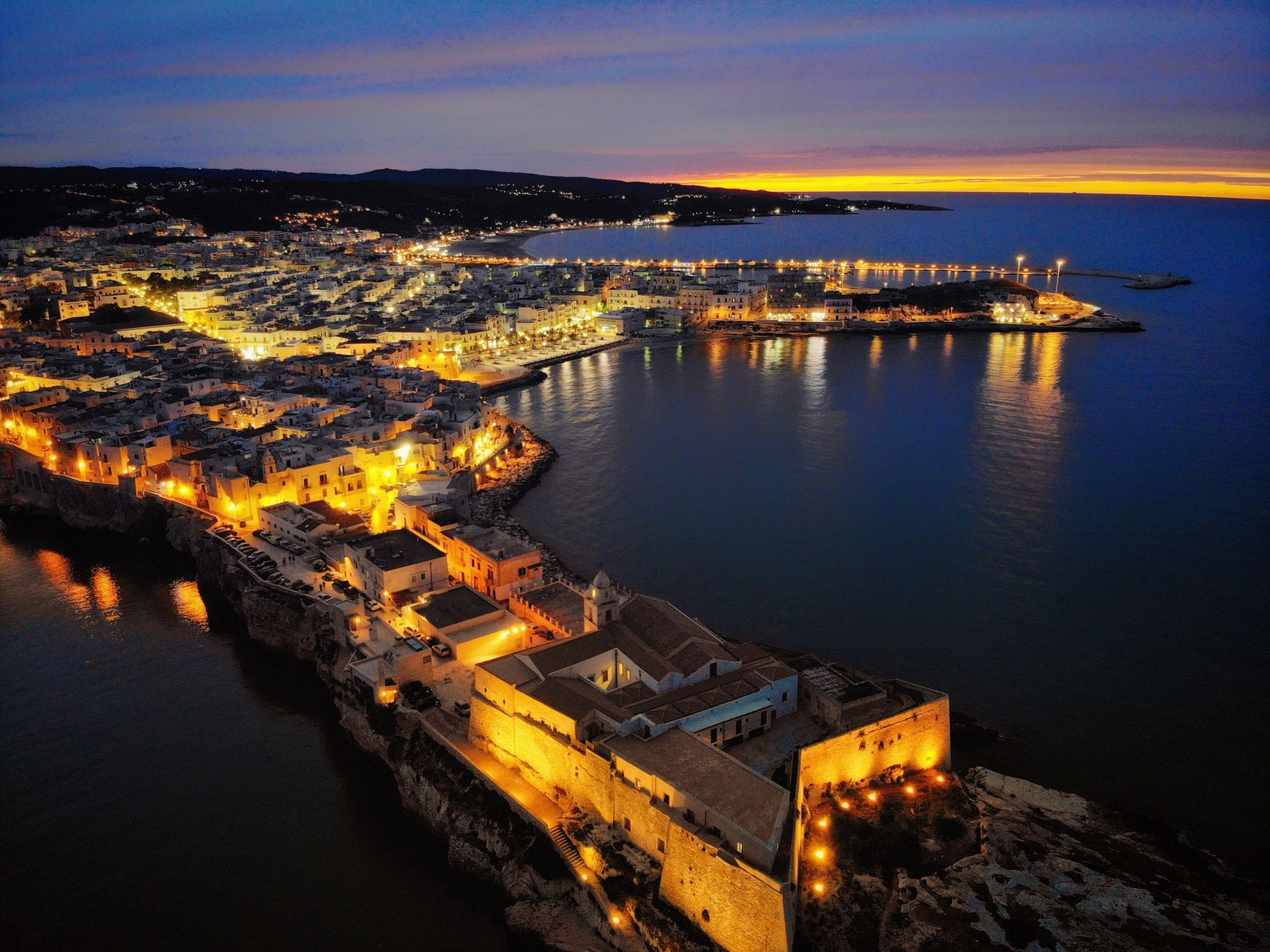
Be honest with yourself about this leg before you drive it: Bari to Vieste is about two and a half hours, and the Gargano is far from everything else in the region. That is exactly why it is worth three nights rather than one, and why it goes at the end. It is a different landscape entirely, a forested limestone promontory sticking out into the Adriatic, with sea caves cut into the cliffs below it.
What to do. Take a boat tour out to the sea caves, which is the thing to do here and only possible from the water. Pizzomunno Beach sits right below the old town with its famous limestone monolith standing alone on the sand. Vieste Cathedral is small and worth a look, and the old town's narrow white streets are best in the early evening. Inland, the Foresta Umbra is ancient beech forest, cool and shaded, and a genuine relief if you have come in high summer.
More coast, if you want it. The Gargano's beaches are the most dramatic in the region: Baia delle Zagare with its twin rock stacks, and Spiaggia di Vignanotica under white limestone cliffs. Both are in our ranked guide to Puglia's best beaches, which covers how to reach the awkward ones. Zagare in particular is only reachable through a nearby hotel or by boat, so it needs planning rather than a spontaneous drive.
Where to eat. Il Capriccio for seafood in a romantic setting, around €40 per person. Carpaccio for local fish and pasta, around €35. Gargano ceramics are the souvenir.
Where to stay. Stay in Vieste itself rather than one of the resort villages along the coast, unless you specifically want a beach club on your doorstep. The old town is compact and you can walk everywhere. Palace Hotel Vieste is close to the beach with sea views and a rooftop terrace, around €150 per night.
Getting home. Drive back to Bari on your last morning for the flight, which is the two and a half hours again. If you would rather not repeat it, this is the trip where you fly out of Bari and back into it, unlike the Salento-only version below.
Getting between the stops
A car is not optional in Puglia. Trains connect the bigger towns slowly and reach almost none of the coast, the masserie or the beaches. There is one useful exception: the Bari to Lecce fast train takes about an hour and a half, which makes a two-city trip workable without a car if that is all you want to do.
Fly into one airport and out of the other if it suits you. Bari (BRI) in the north and Brindisi (BDS) in the south are 110 km apart, and a one-way rental between them is a normal, inexpensive booking. For this particular loop, which ends in the Gargano, flying in and out of Bari is simpler. For a Salento-only trip, Brindisi is much closer: about 45 minutes to Lecce.
| From | To | Best option | Time |
|---|---|---|---|
| Bari airport | Bari centre | Train or bus | ~15 min |
| Bari | Polignano a Mare | Car or regional train | ~30 min |
| Polignano a Mare | Alberobello | Car | ~30 min |
| Alberobello | Ostuni | Car | ~40 min |
| Ostuni | Lecce | Car | ~1 hour |
| Bari | Lecce | Car, or Frecciargento | ~2 hours by car, ~1h30 by fast train |
| Alberobello | Matera | Car | ~1 hour (65 km) |
| Lecce | Santa Maria di Leuca | Car | ~1h15 |
| Bari | Vieste (Gargano) | Car | ~2h30 |
| Brindisi airport | Lecce | Bus or car | ~45 min |
Two things about driving here that nobody tells you. Historic centres are ZTL-restricted, so park outside the walls in Ostuni, Lecce and Polignano and walk in; the cameras are automatic and the fines arrive at home months later. And rural roads are fast and narrow, while the coastal roads in August are congested enough to double a journey time.
Turn these stops into a route
Pick your favourites and Stippl orders them, adds travel times and builds the day-by-day.
When to go, and what the weather actually does
May, June and September are the months, and September is the pick: the sea is still warm, the crowds have thinned and the olive harvest is starting. April and October are both good and quieter again. July and August are hot, full and expensive, and August is the Italian holiday peak, with Ferragosto on the 15th as the busiest single day of the year.
The part visitors underestimate is that Puglia is dry as well as warm. Bari averages 565 mm of rain a year, less than a third of what falls in the Dolomites, and just 25 mm in each of June and July. November is the wettest month at 75 mm and also when the coastal towns start closing for the winter. Inland towns stay open year-round and are close to empty.
| Month | Average temperature (Bari) | Verdict |
|---|---|---|
| April | 13.9° | Pleasant and quiet, before the season opens properly |
| May | 18.3° | Warm, dry, everything opening, sea still cool |
| June | 22.7° | Hot and dry, and not yet full |
| July | 25.2° | Hot, dry and busy. The sea is the point |
| August | 25.4° | Hottest, fullest, most expensive |
| September | 21.4° | The pick: warm sea, thinning crowds, harvest |
| October | 17.4° | Warm days, first rains, olive harvest |
Travellers planning Puglia with Stippl are the earliest planners of any Italian destination we track, booking about 113 days ahead on average, against roughly 71 days for Italy as a whole. That is not caution, it is necessity: the good masserie are small and they fill.
What two weeks in Puglia costs
Puglia is the cheap half of southern Italy, and every source we cross-checked says so: accommodation, eating and beaches all run below the Amalfi Coast and Capri. Two weeks here costs roughly what a long weekend costs there.
Working from the accommodation prices in this itinerary, a mid-range version of this trip lands around €150-345 per person per day including your room, meals, fuel and sights. A leaner version, staying in smaller guesthouses and eating one main meal out, works at €70-125 per person per day. Some real numbers to build on:
- Pizza around €6, a plate of pasta €12-18, a trattoria dinner about €25
- A cappuccino €1.50-3.50, a gelato about €2
- A beach club sunbed and umbrella €15-30 a day in season
- Grotte di Castellana €25 for the full tour, €22 for the short one
- Castel del Monte €10, or free on the first Sunday of the month
The two costs people forget are the car (fuel and the rental itself, which a city trip would not carry) and the beach clubs, because much of the good coast is concessioned and the sunbed is a daily charge rather than a one-off. Eating out is genuinely inexpensive by Italian standards, and the regional wines, Primitivo and Negroamaro, are cheap at source.
Track what you actually spend
Set a daily budget per country and log expenses in any currency while you travel.
Practical tips for this route
- Book the masseria first, then everything else. It is the one thing on this route that sells out, and Puglia is booked further ahead than any other Italian destination we see.
- Take a small car. Historic centres have streets built for carts, and half the parking is on-street outside the walls.
- Carry cash. It is more useful here than in northern Italy, particularly in the small towns and at beach clubs.
- Plan around the lunch closure. Inland towns shut properly from roughly 13:00 to 17:00, and that is not a suggestion. Use it for the drive between stops, or for the beach.
- Do not try to add the Salento tip and the Gargano to a shorter trip. They are 400 km apart. If you have ten days, drop the Gargano and keep the Salento; the drive is the thing that eats the time.
Describe your trip, get a Puglia itinerary in seconds
Everything in this guide is already in Stippl. Tell the planner how long you have and what you like: it builds the route, the days and the travel times, and you edit whatever you want.
Plan your Puglia route in Stippl
Two weeks, ten places and one hire car is a lot to hold in your head. Drop all of these stops into a Stippl trip and it orders them, works out the drive times between them and builds the day-by-day, so you can see straight away whether the Gargano really fits before you book the flights. Add your masseria, your restaurant bookings and the boat tour in Vieste, share it with whoever is coming, and take it offline when you get there.
One more thing worth reading before you go: our guide to the best places to eat in Puglia, if you would rather plan this trip around the orecchiette than the trulli.
Read more: things to do in Italy
Read more: 20 Best Places to Eat in Puglia: A Must for Food Lovers
Frequently asked questions about Italy
A week covers the Valle d'Itria and the Salento, ten days adds the coast at both ends, and two weeks is the version where the Gargano fits and nothing is rushed. Puglia is 400 km end to end, so the deciding factor is not what you want to see but how much of that distance you are willing to drive.
Yes, for a trip like this one. Trains connect the larger towns slowly and reach almost none of the coast, the masserie or the beaches. The one exception is the Bari to Lecce fast train, about an hour and a half, which makes a two-city trip workable car-free if you stay put in both.
May, June and September, and September is the strongest of the three: the sea is still warm, the crowds have gone home and the harvest is starting. August is hot, full and expensive, and it is when most Italians take their own holiday.
Bari (BRI) in the north and Brindisi (BDS) in the south. They are 110 km apart and one-way rentals between them are normal and cheap. For this 14-day loop, which ends up in the Gargano, fly in and out of Bari. For a Salento-only trip, Brindisi is about 45 minutes from Lecce.
You can, but they are not neighbours in practice: it is a long drive or a train via Naples, and each region deserves its own week. If you are doing both, give Puglia the driving half and the Amalfi Coast the staying-put half, and book your Amalfi meals early.