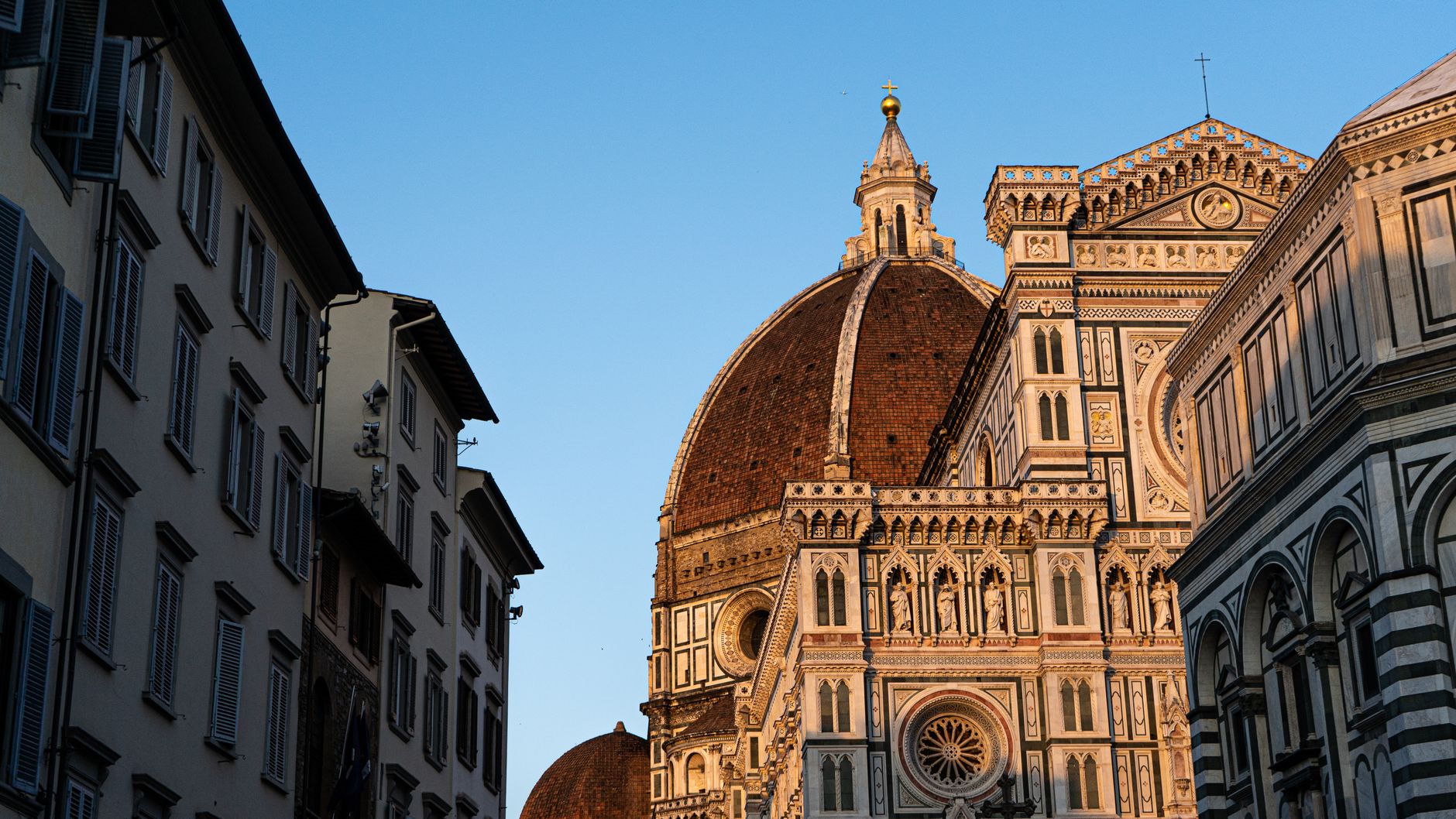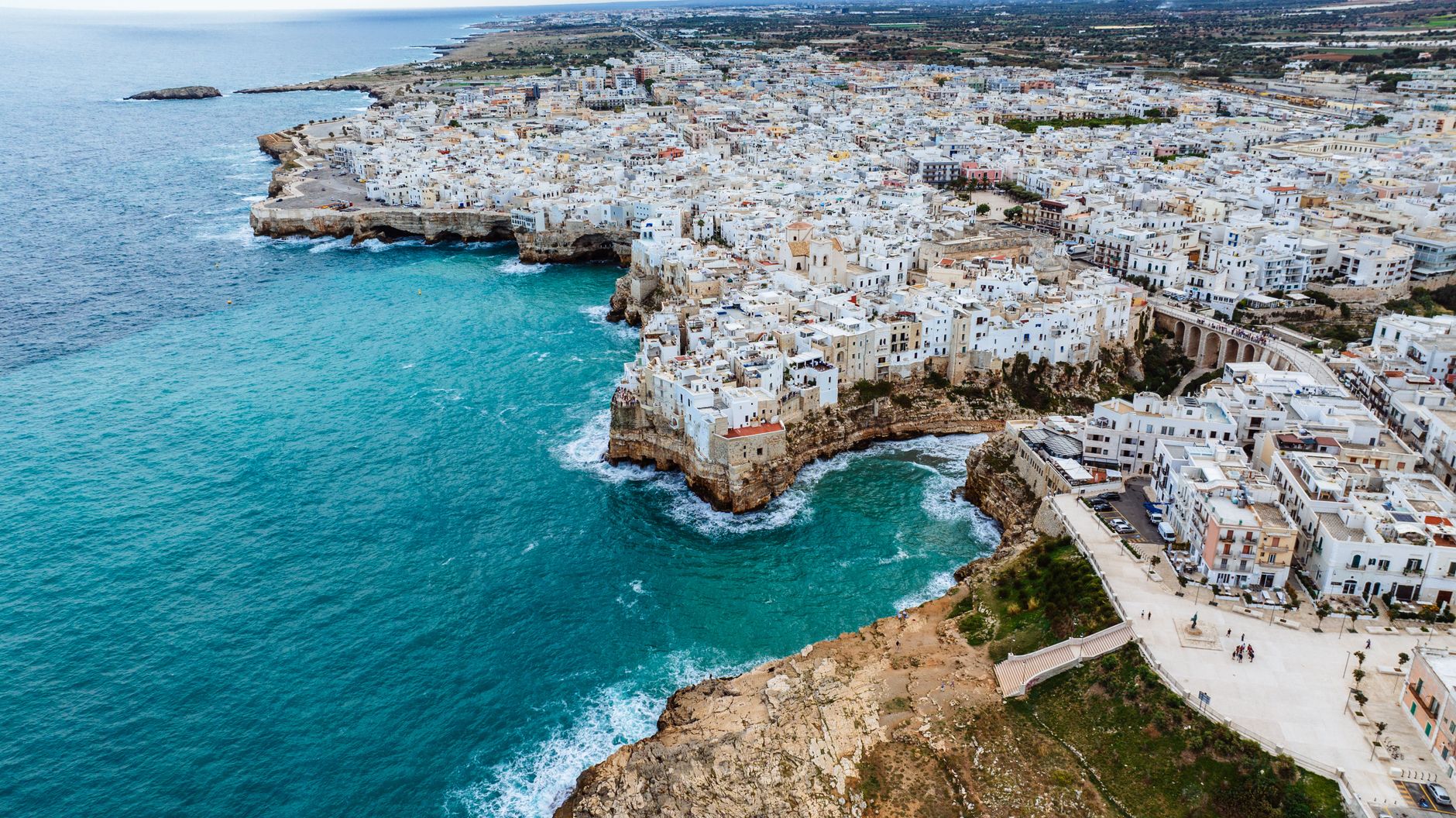


You'll also find where each city actually sits on the map, how many nights travellers really give it, three train routes that string them together in a sensible order, and the months to aim for. Because the honest problem with a list like this isn't which ten cities. It's which three you can fit, and in what order.
Plan Italy in Stippl
Day-by-day planning, stays and budget in one app, with every place from this guide already on the map.
Download the appNorthern Italy's best cities at a glance
Ten cities, what each one is actually for, and where it sits. Nine of them are in north Italy proper; Florence is the one that isn't, and there's a good reason it keeps getting counted anyway.
| City | Where it sits | Go for |
|---|---|---|
| Milan | The Po Valley, Italy's front door from the north | Design, shopping, the Duomo rooftop, the Last Supper |
| Venice | The Veneto lagoon, 118 islands, no roads | The canals, St Mark's, Burano, the sheer strangeness of it |
| Florence | Tuscany, so central Italy rather than the north | The Renaissance in one walkable half hour |
| Verona | The Veneto, between Venice and Lake Garda | The Roman arena, Piazza delle Erbe, the Adige |
| Bologna | Emilia-Romagna, and Italy's rail crossroads | Tagliatelle al ragù, 62 km of porticoes, student prices |
| Turin | Piedmont | Royal palaces, historic cafés, chocolate |
| Genoa | The Ligurian coast | The old town, pesto, the Riviera on your doorstep |
| Parma | Emilia-Romagna | Parmigiano Reggiano, prosciutto, a very calm afternoon |
| Trento | The Dolomites, not the lowland cities | Mountains from the city centre, Italian and Austrian at once |
| Bergamo | About 50 minutes by train from Milan | A walled upper town on a hill, and far fewer people |
Where the cities of northern Italy actually sit
Most lists of the best cities in Northern Italy give you ten dots and no map. Here's how they group, because that's what decides your trip.
Milan and Bergamo: the Lombardy pair. Milan is the region's front door, and it's the only big Italian city travellers use in both directions, opening 26.5% of the multi-stop trips it appears on and closing another 17.5%. Bergamo is 50 minutes away by train, which makes it the easiest half-day in this whole list. One warning worth repeating: the airport called "Milan Bergamo" is 45 km from Milan, in Bergamo province, and a lot of people book it thinking otherwise.
Venice and Verona: the Veneto pair. They're an hour and ten minutes apart by train, and they're also each other's strongest partner in our own trip data. If you're planning Venice, Verona is the stop the numbers say you'll probably add.
Bologna and Parma: the Emilia-Romagna pair. Bologna Centrale is where the north-south and east-west high-speed lines cross, which is why so many itineraries pass through it whether or not anyone planned to stop. Parma is under an hour further down the same line. Emilia-Romagna carries more protected-origin products than any other Italian region, and both cities are inside that hour.
Turin and Genoa: the western pair. These two get skipped most often, and they're both direct trains of one to two hours from Bologna. Genoa is also the gateway to the Ligurian coast, so it doubles as the start of a Cinque Terre leg rather than a detour from one.
Trento: the alpine outlier. Trento belongs to the Dolomites rather than to the flat Po Valley cities, and it behaves like it. Verona is one of the Dolomites' listed road gateways at 1.5 to 3.5 hours by car, and Venice is about two hours, so Trento pairs with mountains rather than with cathedrals.
And Florence, which isn't in northern Italy at all. Florence is the capital of Tuscany, and Tuscany is central Italy. Our own country dossier files it under the centre, not the north. It gets counted on every "best cities in north Italy" list anyway for one simple reason: it's 35 minutes from Bologna by Frecciarossa, the shortest hop between two major Italian cities, and about two hours from both Venice and Milan. Geographically it's a cheat. Practically it slots into a northern route better than Turin does.
1. Milan: The Fashion and Business Capital of Italy
Why visit Milan?
Milan is Italy's economic powerhouse and fashion capital, known for its luxury shopping, high-end dining, and historic sites. While often overshadowed by Rome or Florence, Milan has a unique mix of old and new. The magnificent Duomo di Milano dominates the skyline, while sleek skyscrapers define the modern business district. The city is also a haven for art lovers, home to Leonardo da Vinci's The Last Supper and numerous world-class museums.
Worth knowing before you go: this is not a Mediterranean city. January averages 3.5°C in Milan against Naples' 9°C, and it rains 945 mm a year.

Things to do in Milan
- Visit the Duomo di Milano and climb to the rooftop for stunning views. The Duomo Pass is €22 with the stairs and €26 with the lift; the cathedral and museum alone are €10 and valid for 72 hours.
- See The Last Supper at Santa Maria delle Grazie (book tickets in advance!).
- Walk through the Galleria Vittorio Emanuele II, Italy's oldest shopping arcade, opened in 1865.
- Explore Sforza Castle and its surrounding parks.
- Watch an opera at the historic Teatro alla Scala.
Where to eat in Milan
- Trattoria Milanese (Mid-range, €30 per person): a historic restaurant serving Risotto alla Milanese.
- Piz (Budget, €10 per person): one of the best pizza places in Milan with a lively atmosphere.
Between roughly 6 pm and 9 pm, an aperitivo at €10 to €15 comes with enough food to replace dinner. That's a Milanese invention, not a national one, and it's the cheapest good evening in the city.
Where to stay in Milan
- Hotel Principe di Savoia (Luxury, €350 per night): a 5-star hotel in the heart of Milan.
- Room Mate Giulia (Mid-range, €150 per night): stylish and centrally located.
- Ostello Bello (Budget, €40 per night): a top-rated hostel with a great social atmosphere.
Two weeks to route around if you can: Salone del Mobile in April and the two Fashion Weeks in late February and late September. Hotel rates in the centre multiply during all three.
2. Venice: The City of Canals and Romance
Why visit Venice?
Venice is one of the most unique cities in the world, built on over 100 small islands connected by bridges and canals. With its iconic gondolas, historic palaces, and world-famous Carnival, Venice is a must-visit for travellers seeking history, culture, and romance. There are no cars, making it an entirely pedestrian city, perfect for wandering through charming alleyways and hidden piazzas.
118 islands, roughly 400 bridges, six sestieri, and no roads at all. That last part governs everything, from how your luggage arrives to what a coffee costs.
Things to do in Venice
- Take a gondola ride through the Grand Canal. The municipal rate is €90 for 30 minutes by day and €110 after 7 pm, and that's per boat, not per person, so a group of six pays the same as a couple.
- Visit St. Mark's Basilica and the Doge's Palace. The Doge's Palace is €30 booked 30 or more days ahead and €35 inside that, and it includes the Correr and two other museums.
- Walk across the Rialto Bridge for a postcard-perfect view.
- Explore the colourful island of Burano, about 45 minutes by vaporetto line 12 from Fondamente Nove.
- Get lost in the hidden streets of Dorsoduro.
Where to eat in Venice
- Osteria alle Testiere (Mid-range, €40 per person): famous for its fresh seafood dishes.
- Dal Moro's Fresh Pasta To Go (Budget, €8 per person): great for affordable, freshly made pasta.
Where to stay in Venice
- Gritti Palace (Luxury, €500 per night): one of Venice's most exclusive hotels.
- Hotel Antiche Figure (Mid-range, €120 per night): a charming hotel on the Grand Canal.
- Generator Venice (Budget, €35 per night): a stylish hostel on Giudecca Island.
One booking note that catches people out: a single vaporetto ride costs close to €9.50, so if you're using the boats at all, the 24-hour pass at around €25 pays for itself in three rides. Under 30, the €6 Rolling Venice card cuts the 72-hour pass from about €45 to about €27.
3. Florence: The Birthplace of the Renaissance
Why visit Florence?
Florence is a living museum, home to some of the greatest art and architecture in human history. The city was the heart of the Italian Renaissance, with masterpieces by Michelangelo, Botticelli, and Leonardo da Vinci. Beyond art, Florence offers stunning views from Piazzale Michelangelo, incredible Tuscan cuisine, and a lively atmosphere.
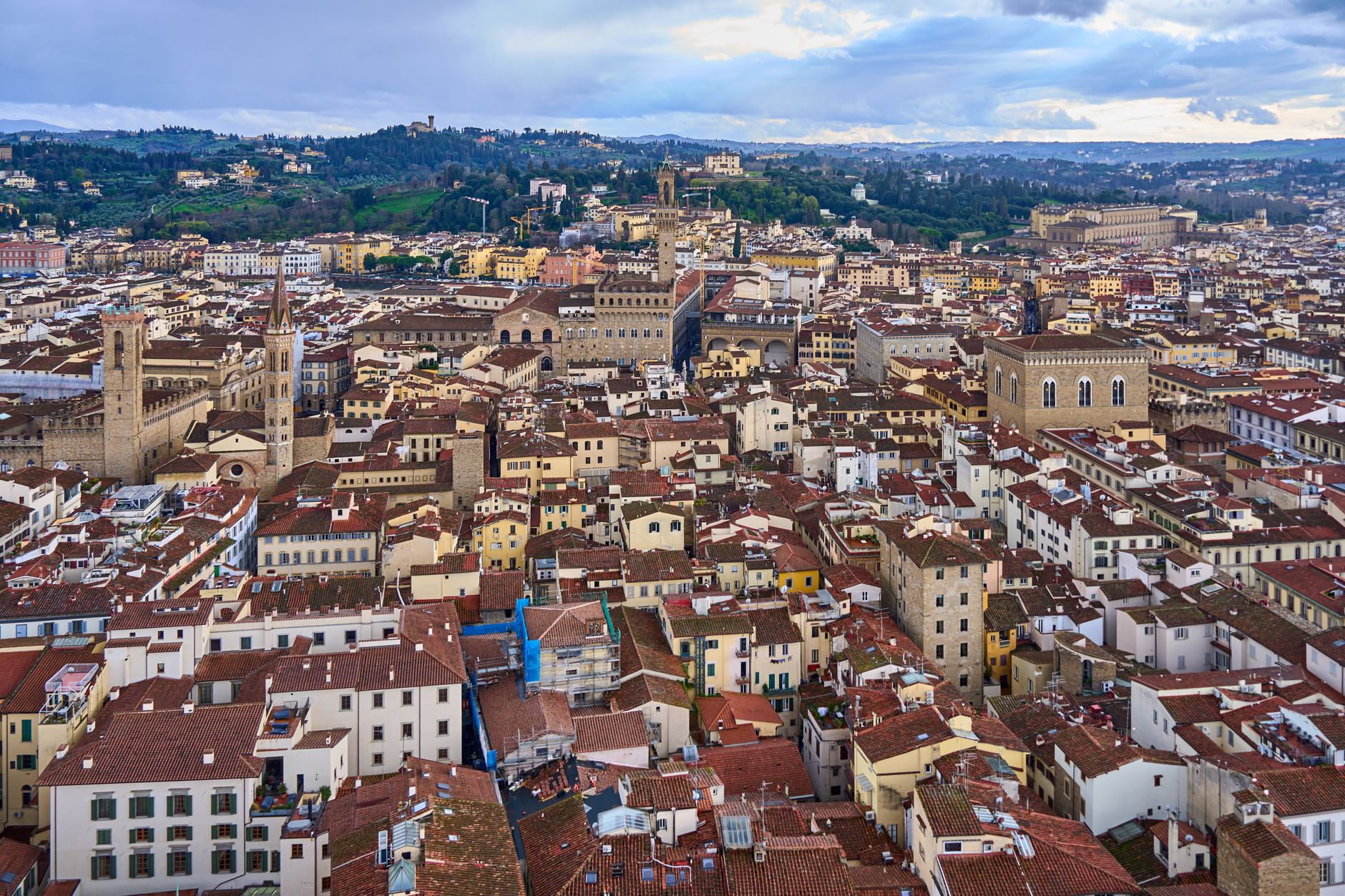
It's also small. The historic centre crosses on foot in about half an hour, which is both the charm and the problem: everyone is in the same six streets.
Things to do in Florence
- Admire Michelangelo's David at the Galleria dell'Accademia. Entry is €16 plus a €4 booking fee, and a 48-hour combined ticket with the Uffizi came in at €26 from March 2026.
- Visit the Uffizi Gallery, home to Botticelli's Birth of Venus. It's €25 from January 2026, or €16 if you go in after 4 pm.
- Climb to the top of Florence Cathedral (Duomo). The cathedral itself is free, one of many free things to do in Florence; the dome is a 463-step ticketed slot on the Brunelleschi Pass, and there is no lift.
- Walk across the Ponte Vecchio, Florence's historic bridge.
- Take a day trip to the Chianti wine region.
Where to eat in Florence
- Trattoria Mario (Budget, €15 per person): famous for Florentine steak.
- Osteria Vini e Vecchi Sapori (Mid-range, €30 per person): a hidden gem serving traditional Tuscan dishes.
Where to stay in Florence
- The St. Regis Florence (Luxury, €450 per night): a 5-star hotel by the Arno River.
- Hotel Spadai (Mid-range, €140 per night): modern comfort near the Duomo.
- Hostel Archi Rossi (Budget, €35 per night): a great choice for backpackers.
Book the flat you like early. New short-term rentals have been banned in the historic centre since October 2023, with a moratorium protecting existing operators until 31 May 2028, so supply inside the walls is fixed rather than growing.
4. Verona: The City of Romeo & Juliet
Why visit Verona?
Verona is a romantic and historic city often overshadowed by its more famous neighbours, but it's one of the most charming destinations in Italy. With its well-preserved Roman amphitheatre, medieval architecture, and Shakespearean fame, Verona offers a blend of history and literary magic.
It's also the city Venice travellers add most often. In our own trip data Verona is Venice's single strongest partner, well above what you'd expect from chance alone, and the two are an hour and ten minutes apart by train.

Things to do in Verona
- Visit Juliet's House (Casa di Giulietta).
- Explore the Roman Arena, one of Italy's best-preserved amphitheatres.
- Walk along the Adige River and cross the Ponte Pietra.
- Wander through Piazza delle Erbe, a lively market square.
Where to eat in Verona
- Locanda 4 Cuochi (Mid-range, €30 per person): great for handmade pasta.
- Antica Bottega del Vino (Luxury, €50 per person): a historic wine bar serving Veronese cuisine.
Where to stay in Verona
- Due Torri Hotel (Luxury, €300 per night): elegant and centrally located.
- Hotel Milano & Spa (Mid-range, €120 per night): features a rooftop spa with city views.
- The Hostello (Budget, €30 per night): a fun and social hostel.
5. Bologna: The Culinary Capital of Italy
Why visit Bologna?
Bologna is a food lover's paradise, known for its authentic Italian cuisine, medieval architecture, and lively student culture. As the capital of the Emilia-Romagna region, Bologna is home to some of Italy's most famous dishes, including tagliatelle al ragù, mortadella, and tortellini. Beyond the food, the city offers historic towers, busy piazzas, and the oldest university in the world.
The food rule locals will actually correct you on: there is no spaghetti bolognese in Bologna. The dish is tagliatelle al ragù, the flat egg pasta is the point, and asking for it by that name changes how the afternoon goes.
Things to do in Bologna
- Climb the Clock Tower (Torre dell'Orologio) on Piazza Maggiore for panoramic views. It's €5, or free with the Bologna Welcome Card. The Asinelli Tower has been closed since October 2023 with no reopening date, because of stabilisation works on the leaning Garisenda next door that run to about 2028. Most guides still tell you to climb it.
- Visit Piazza Maggiore, the city's grand central square, and the Basilica di San Petronio, whose floor carries the world's largest indoor meridian line.
- Explore the University of Bologna, founded in 1088 and the oldest in continuous operation anywhere.
- Take a food tour to try traditional Bolognese cuisine.
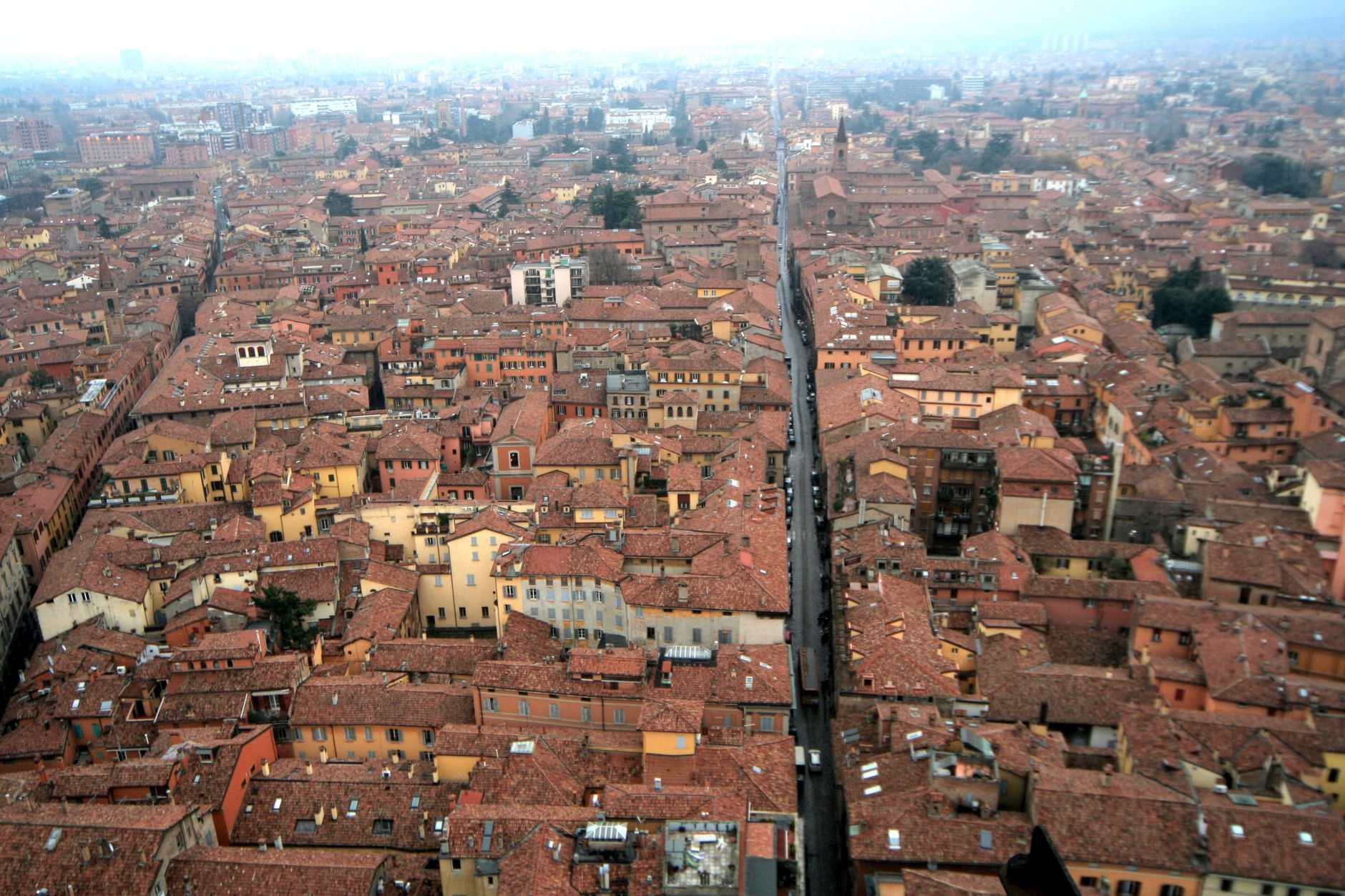
- Walk under Bologna's porticoes, UNESCO-listed in 2021: 62 km in total, about 42 km of it inside the historic centre, including a 3.8 km covered climb to the Sanctuary of San Luca.
Where to eat in Bologna
- Osteria dell'Orsa (Budget, €10 per person): a local favourite for authentic tagliatelle al ragù.
- Trattoria Anna Maria (Mid-range, €30 per person): serves handmade tortellini in broth.
Where to stay in Bologna
- Grand Hotel Majestic (Luxury, €300 per night): a historic 5-star hotel in the city centre.
- Hotel Corona d'Oro (Mid-range, €120 per night): offers classic Italian charm.
- Dopa Hostel (Budget, €35 per night): a cosy and modern hostel near the city centre.
If you're watching what you spend, this is the city to lean on. Bologna is markedly cheaper than Florence 35 minutes away, and the student streets around Via Zamboni set the floor for the whole region.
6. Turin: The Underrated Gem of Northern Italy
Why visit Turin?
Turin, the capital of the Piedmont region, is a cultural and historical powerhouse. Known for its grand boulevards, royal palaces, and historic cafés, Turin also has a strong connection to chocolate and coffee culture. It's home to the Shroud of Turin, the Fiat car industry, and some of the best wines in Italy. Compared to Milan or Rome, Turin offers a less touristy but equally rich experience.
It's also the least-planned city on this list by some distance in our own data, which is either a warning or the whole appeal, depending on what you came for.
Things to do in Turin
- Visit the Mole Antonelliana, home to the National Cinema Museum.
- See the Shroud of Turin at the Cathedral of Saint John the Baptist.
- Walk through Piazza Castello, surrounded by royal palaces.
- Explore Parco del Valentino, a beautiful riverside park.
- Enjoy an aperitivo at a historic café like Caffè Torino.
Where to eat in Turin
- Guido Gobino (Budget, €8 per person): a famous chocolatier known for gianduja chocolates.
- Tre Galline (Mid-range, €40 per person): serves traditional Piedmontese cuisine like vitello tonnato.
Where to stay in Turin
- Principi di Piemonte (Luxury, €280 per night): a refined 5-star hotel.
- NH Collection Torino Piazza Carlina (Mid-range, €130 per night): stylish and centrally located.
- Attic Hostel Torino (Budget, €30 per night): a cosy hostel with a friendly atmosphere.
7. Genoa: Italy's Overlooked Seaside City
Why visit Genoa?
Genoa is one of Italy's most underrated cities, a historic port with a rich maritime history. The birthplace of Christopher Columbus, Genoa has colourful architecture, an impressive old town, and delicious seafood. It's the perfect gateway to the Italian Riviera, including Cinque Terre and Portofino.
Things to do in Genoa
- Walk through Genoa's Old Town, one of the largest medieval centres in Europe.
- Visit Piazza De Ferrari, the city's main square.
- Explore the Aquarium of Genoa, the largest in Italy.
- Take a day trip to Portofino or Cinque Terre.
- Try the city's most famous dish, pesto alla Genovese.
Where to eat in Genoa
- Osteria di Vico Palla (Mid-range, €30 per person): a great spot for fresh seafood.
- Antica Osteria di Vico Palla (Budget, €12 per person): serves authentic trofie al pesto.
Where to stay in Genoa
- Grand Hotel Savoia (Luxury, €250 per night): a 5-star hotel with rooftop views.
- Hotel Palazzo Grillo (Mid-range, €120 per night): a boutique hotel in a historic building.
- Manena Hostel (Budget, €28 per night): a great budget-friendly option in the old town.
8. Parma: The Home of Parmesan and Prosciutto
Why visit Parma?
Parma is a small but incredibly important city for food lovers, famous for its Parmigiano Reggiano cheese, Prosciutto di Parma, and balsamic vinegar. Beyond the food, Parma has stunning architecture, charming streets, and a relaxed atmosphere.
It's also under an hour from Bologna by train, which is why it works as a half-day rather than a separate trip. Emilia-Romagna carries more protected-origin products than any other Italian region, and Parma supplies two of the most famous.
Things to do in Parma
- Visit the Baptistery of Parma, a stunning pink marble structure.
- Tour a Parmigiano Reggiano cheese factory.
- Explore the Teatro Farnese, a historic wooden theatre.
- Stroll through Parco Ducale, a peaceful green space.
Where to eat in Parma
- Trattoria Corrieri (Mid-range, €30 per person): best for traditional Parma-style pasta dishes.
- Salumeria Garibaldi (Budget, €10 per person): a local deli with Parma ham sandwiches.
Where to stay in Parma
- Grand Hotel de la Ville (Luxury, €220 per night): a top choice for a refined stay.
- Novotel Parma Centro (Mid-range, €100 per night): a modern and comfortable hotel.
- Bed & Breakfast Parma (Budget, €40 per night): a charming, affordable stay.
9. Trento: A Hidden Gem in the Italian Alps
Why visit Trento?
Trento is one of Northern Italy's most scenic cities, surrounded by snow-capped mountains, vineyards, and medieval castles. It offers a unique blend of Italian and Austrian influences, making it a great off-the-beaten-path destination.
Worth knowing how it fits: our country dossier files Trento under the Dolomites rather than with the lowland cities, and that's the right way to plan it. Trento pairs with mountains, not with cathedrals.
Things to do in Trento
- Explore Castello del Buonconsiglio, Trento's stunning medieval castle.
- Take a cable car to Monte Bondone for hiking and skiing.
- Wander through the charming Piazza Duomo.
- Enjoy a wine tasting in the Trentino region.
Where to eat in Trento
- Uva e Menta (Mid-range, €25 per person): great for regional Trentino cuisine.
- La Cantinota (Budget, €15 per person): serves homemade polenta dishes.
Where to stay in Trento
- NH Trento (Luxury, €160 per night): a sleek hotel with great amenities.
- Hotel America (Mid-range, €90 per night): comfortable and well-located.
- Hi Hostel Trento (Budget, €30 per night): a budget-friendly option with mountain views.
10. Bergamo: A Medieval Gem with Stunning Views
Why visit Bergamo?
Bergamo is one of Italy's most underrated cities, offering stunning medieval architecture, breathtaking hilltop views, and a unique dual-level city layout. The Città Alta (Upper Town), a UNESCO World Heritage Site, is perched on a hill and surrounded by Venetian walls, while the Città Bassa (Lower Town) offers a more modern, lively atmosphere. With fewer tourists than Milan or Venice, Bergamo is a hidden gem worth exploring.
The practical version: it's about 50 minutes from Milan by train, so it's the easiest thing on this list to add to a trip you've already booked.
Things to do in Bergamo
- Ride the funicular to the Città Alta and enjoy panoramic views.
- Stroll through Piazza Vecchia, the city's stunning medieval square.
- Visit the Basilica di Santa Maria Maggiore, known for its beautiful frescoes.
- Walk along the Venetian Walls, a UNESCO World Heritage Site.
- Try Polenta e Osei, Bergamo's signature dessert.
Where to eat in Bergamo
- Trattoria Sant'Ambroeus (Mid-range, €30 per person): famous for Casoncelli alla Bergamasca, a local stuffed pasta.
- Da Mimmo (Budget, €15 per person): a historic pizzeria in Città Alta.
Where to stay in Bergamo
- Relais San Lorenzo (Luxury, €250 per night): a 5-star hotel in the heart of Città Alta.
- Gombit Hotel (Mid-range, €120 per night): a boutique hotel with a mix of modern and historic design.
- Central Hostel Bergamo (Budget, €35 per night): a great affordable stay near the train station.
How long each city gets, and in what order to do them
This is the part most guides skip, and it's the part that decides whether your week works. These are the stays travellers who planned their Italy trip with Stippl actually booked, not a recommendation we made up.
- Venice: two nights. Four in ten Venice stops are exactly two nights and 94% are three or fewer. It's the sharpest peak of any Italian destination, which means the crowd has converged on the same answer.
- Florence: two nights. A third of Florence stops are exactly two. Florence has a right answer where Rome doesn't.
- Milan: two nights, and nearly half take one. 46.6% of Milan stops are a single night, the shortest big-city stay in Italy. Two nights covers the Duomo, the Last Supper, Brera and an aperitivo without hurrying.
- Bologna: one night. It's the only Italian destination where the typical stay we see is a single night, and 51% of Bologna stops are exactly that. Two nights if you're here to eat properly, or to run out to Modena and Parma.
For the rest, treat them as the connective tissue: Bergamo as a half-day from Milan, Verona as a night between Milan and Venice, Parma as a half-day from Bologna. That shape is how the routes below are built.
Across Italy as a whole, a typical trip planned with Stippl runs about twelve days across five stops. The northern cities sit close enough together that five stops in twelve days is comfortable rather than frantic.
The question people actually ask isn't which cities, it's what order. Here are three routes that link the cities of northern Italy, all on the train, no car needed.
Route 1: the classic north, one week
Milan (2 nights) → Lake Como (2 nights) → Verona (1 night) → Venice (2 nights)
The straightest line through northern Italy, and every one of these pairings is above what chance would predict in our own trip data. Lake Como is Milan's single strongest partner, which is the one thing about Milan that surprises people: our data says Milan is what you use to reach the lakes. Milan to Como is 40 to 70 minutes by train, Verona to Venice is an hour and ten, and if you'd rather skip the lakes, Milan to Venice direct is about two and a half hours on the Frecciarossa.
Add Bergamo as a half-day out of Milan if your first day is a travel day and you don't want to waste it.
Turn these stops into a route
Pick your favourites and Stippl orders them, adds travel times and builds the day-by-day.
Route 2: the food line, five to seven days
Milan (2 nights) → Bologna (2 nights) → Parma (half-day) → Florence (2 nights)
Milan to Bologna is about an hour. Parma sits on the same line under an hour beyond it, so you can do it as a morning and be back for dinner. Bologna to Florence is 35 minutes, the shortest hop between two major Italian cities anywhere in the country.
This is the route for anyone who came for the food rather than the art. It also happens to be the cheapest of the three: Bologna's student prices sit right in the middle of it, and they're the lowest of any city on this list.
Route 3: the west, for a second visit
Turin → Genoa → Bologna
The one almost nobody does, and the reason it works is Bologna. Turin and Genoa are both direct trains of one to two hours from Bologna, and in our own data both are stronger pairings with Bologna than you'd expect. Bologna is the hinge here rather than the destination.
From Genoa you're also on the doorstep of the Ligurian coast, so this route extends naturally into Cinque Terre or Portofino rather than doubling back.
When to visit the cities of north Italy
Every fact dossier we hold for these cities lands on the same two windows: April to June and September to October. May and September are the standouts. But northern Italy has a few wrinkles the national advice misses.
August is the month to route around. Ferragosto on 15 August starts a shutdown of roughly two weeks as Italians head for the coast and the mountains. In Milan and Bologna this hits harder than the weather does: a real share of the cities' own restaurants and shops close with chiuso per ferie signs. Milan in particular empties rather than fills.
July is hotter than people expect. The Po Valley holds heat and humidity, and Milan, Bologna and Verona all sit in it. Milan averages 25°C in July and it feels heavier than that. Venice in July is genuinely unpleasant in a way Florence and Rome are not, because of the humidity coming off the lagoon.
October brings water to Venice. Acqua alta season runs roughly October to January, driven by the sirocco pushing tides up the Adriatic. The MOSE barriers now close on the worst of it, and they're closing more often each year. October is also Venice's wettest month.
December is genuinely good in the north. This is the one thing the "go in spring" advice gets wrong. Milan's own biggest day is Sant'Ambrogio on 7 December, when the Oh Bej! Oh Bej! street market runs and La Scala opens its season. Bologna's Christmas markets run under the porticoes, which means rain doesn't stop them. And Bologna has the flattest season of any Italian destination except Milan: June to September takes 61% of its arrivals, winter still holds 9%, and nothing closes for the season.
January is the contrarian answer for Venice. Coldest, driest, emptiest, no queues, and the only time the city isn't performing for anyone. Milan in January is a different story: an average of 3.5°C, fog, and the Po Valley's winter smog.
One planning note. Venice is booked further ahead than any other Italian destination we measure, at around 97 days. If you want a specific place inside the lagoon rather than on the mainland at Mestre, three months out is the realistic lead.
Exploring Northern Italy's Best Cities
Northern Italy is a dream for travellers, offering a mix of lively cities, romantic canals, medieval charm, and world-famous cuisine. Whether you're shopping in Milan, wandering through Venice's canals, admiring Renaissance art in Florence, or exploring hidden gems like Verona, each city has its very own distinctive charm.
If you only have room for three, the honest shortlist is Milan, Verona and Venice: one rail line, about two and a half hours end to end, and three completely different versions of Italy.
Essential Northern Italy travel tips
Use the high-speed trains. Trenitalia and Italo run them, and between the big northern cities, or on the longer haul from Rome up to Venice, they beat the car every time. Book direct through their own apps for the best price, and prefer the non-stop services. The cheap regional trains are fine where speed doesn't matter, but validate a paper or regional ticket in the platform machine before boarding or the fine is substantial.
Book the big sights before you leave home. The Last Supper in Milan, the Uffizi and the Accademia in Florence, the Doge's Palace in Venice and the Florence dome climb all sell timed entry, and they sell out days to weeks ahead in season. This isn't optional in northern Italy, it's how the sights work.
Don't drive into the historic centres. Nearly every city here has a camera-enforced ZTL (Zona a Traffico Limitato), the signage is in Italian only, and the fine follows you home. Florence's runs roughly €80 to €335 per entry. Milan adds a congestion charge on top. If you're renting, pick the car up at the airport and only for the countryside legs.
Stay connected with an eSIM. If you're coming from outside the European Union, an eSIM through Stippl saves you the roaming bill and tops up as you go.
Eat the region's own dishes, not a national menu. This is the single most repeated piece of advice across every source we hold, and in the north it's especially true: butter, rice and saffron in Milan rather than tomato and olive oil, tagliatelle al ragù in Bologna, pesto in Genoa, and a very serious argument about tortellini in broth if you're in Emilia-Romagna in winter.
Aperitivo is the budget trick. Between roughly 6 pm and 9 pm, €10 to €15 in Milan and €8 to €12 in Bologna buys a drink with enough food to replace dinner. It's a Milanese invention and it spread across the north.
Frequently asked questions about Italy
Milan, Venice, Verona, Bologna, Turin, Genoa, Parma, Trento and Bergamo are the nine that sit in the north itself. Florence is the tenth most people add, because it's 35 minutes from Bologna by fast train. If you only have room for three, Milan, Verona and Venice works best: one straight rail line.
A week covers three cities properly, including the travel between them. Two weeks lets you add the lakes or the Dolomites without rushing. Across Italy as a whole, a typical trip planned with Stippl runs about twelve days across five stops, and the northern cities are close enough together that five stops in twelve days is comfortable rather than frantic.
Milan if you're flying in from outside Europe: it opens more than a quarter of the multi-stop Italian trips it appears on and closes nearly a fifth, so it works in both directions. Bologna if you want a base to day-trip from, because Florence, Verona, Genoa, Turin, Siena and Pisa are all direct trains of two hours or less.
Bologna, clearly. It's markedly cheaper than Florence 35 minutes away, and the university streets around Via Zamboni set the floor. Milan is the opposite: Italy's most expensive city to sleep in, although a coffee, a panzerotto or an aperitivo cost roughly what they cost anywhere.
April to June and September to October, in every dossier we hold for these cities, with May and September the two standouts. Avoid August: Ferragosto on 15 August starts a shutdown of about two weeks, and in Milan and Bologna a real share of the cities' own restaurants close. December is better than its reputation, especially in Milan and Bologna.
Save these to your trip in Stippl and they are on your map before you land.
Picking three of these ten and working out the order is the actual planning job, and it's the bit that eats an evening. Describe the trip you want and let the Stippl AI trip planner put the cities in order, add the train times, and hand you a day-by-day you can move around. Free forever.
Planning your full Italy trip? Pick your three cities here, then work out the order and the train times. In Milan for the eating rather than the shopping, have a look at where to eat in Milan.